

Hey swimmers,
Last week I wrote about building back1 and how four weeks away from swimming might realistically take six or seven weeks to recover from. Quite a few of you have messaged me since to say how reassuring that was.
This was a lovely, poignant message from Greta which emphasises the context of what “building back” might mean for each of us:
“I've been working hard on reaching a short term goal of a Fitness score of 100, but even as you experienced, I've found a simple 1 week trip, illness, or surgery causes my score to take a dive that takes literally MONTHS to even get back to the same level. In September last year before I got Covid for the first time, my Fitness score was 86. In February this year I finally was back to 86 after Covid recovery and a one week trip). It has steadily been climbing and is now 96 as I sit here writing this...so so close to 100! All this to say, I really appreciated your article! It's good to know that, yes, recovery can be a slog, but we CAN come out the other end!!”
Whether you’re rebuilding after illness, trying to regain some consistency, working towards a new level of fitness, or preparing for a big event, the principle is the same: small, achievable steps, repeated consistently, add up.
But eventually those steps get smaller.
And that’s where consolidation becomes important.
Nearly every Monday morning I swim perhaps the most boring set imaginable (and yet I’ve swum it 22 times already this year!):
10 × 400m, as:
4 × 400m @ CSS +6
3 × 400m @ CSS +5
2 × 400m @ CSS +4
1 × 400m @ CSS +3
It’s 4km of very controlled aerobic swimming, with roughly 20 seconds rest between each 400m - about a 16:1 work-to-rest ratio.
It isn’t difficult because it’s fast. It becomes challenging because it demands concentration, discipline and good pacing. Go off too quickly and you’ll certainly know about it later!
I’ve used this session for years as a benchmark. Sometimes improvement means swimming faster. But equally, it might mean a lower heart rate, better pacing or simply feeling more comfortable doing exactly the same work.
When I first returned after being ill, I wound my CSS right back to 1:24/100m. Considering I’d been around 1:12–1:13/100m when racing in Mallorca, that felt ridiculously slow.
But that was precisely the point.
From there I moved to 1:22, then gradually chipped away: 1:21, 1:20, 1:19, 1:18, 1:17 and finally 1:16/100m last week.
I could have pushed again this morning to 1:15.
Instead, I decided to consolidate.
I repeated exactly the same session using the same 1:16 CSS benchmark. The result was fascinating.
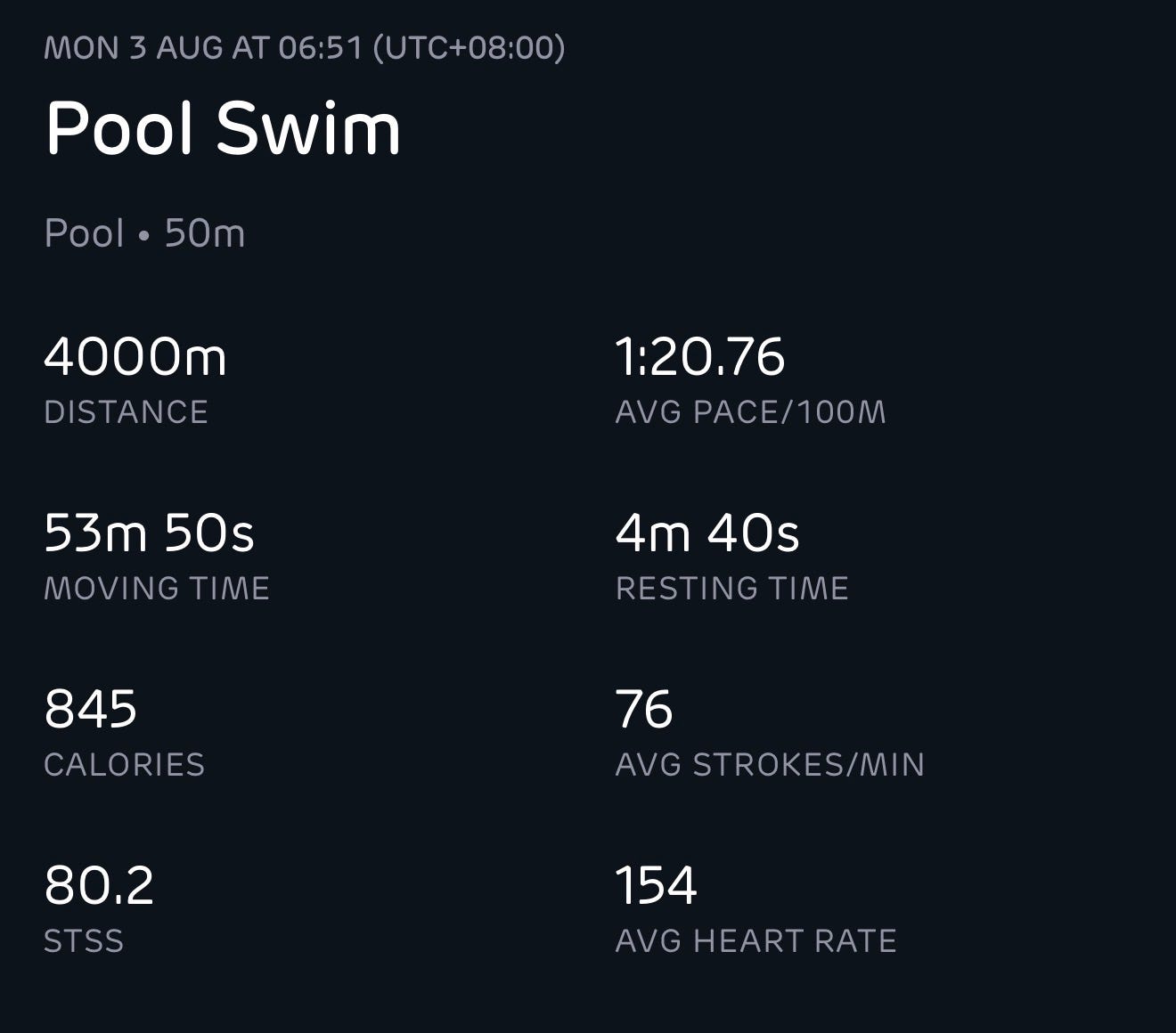
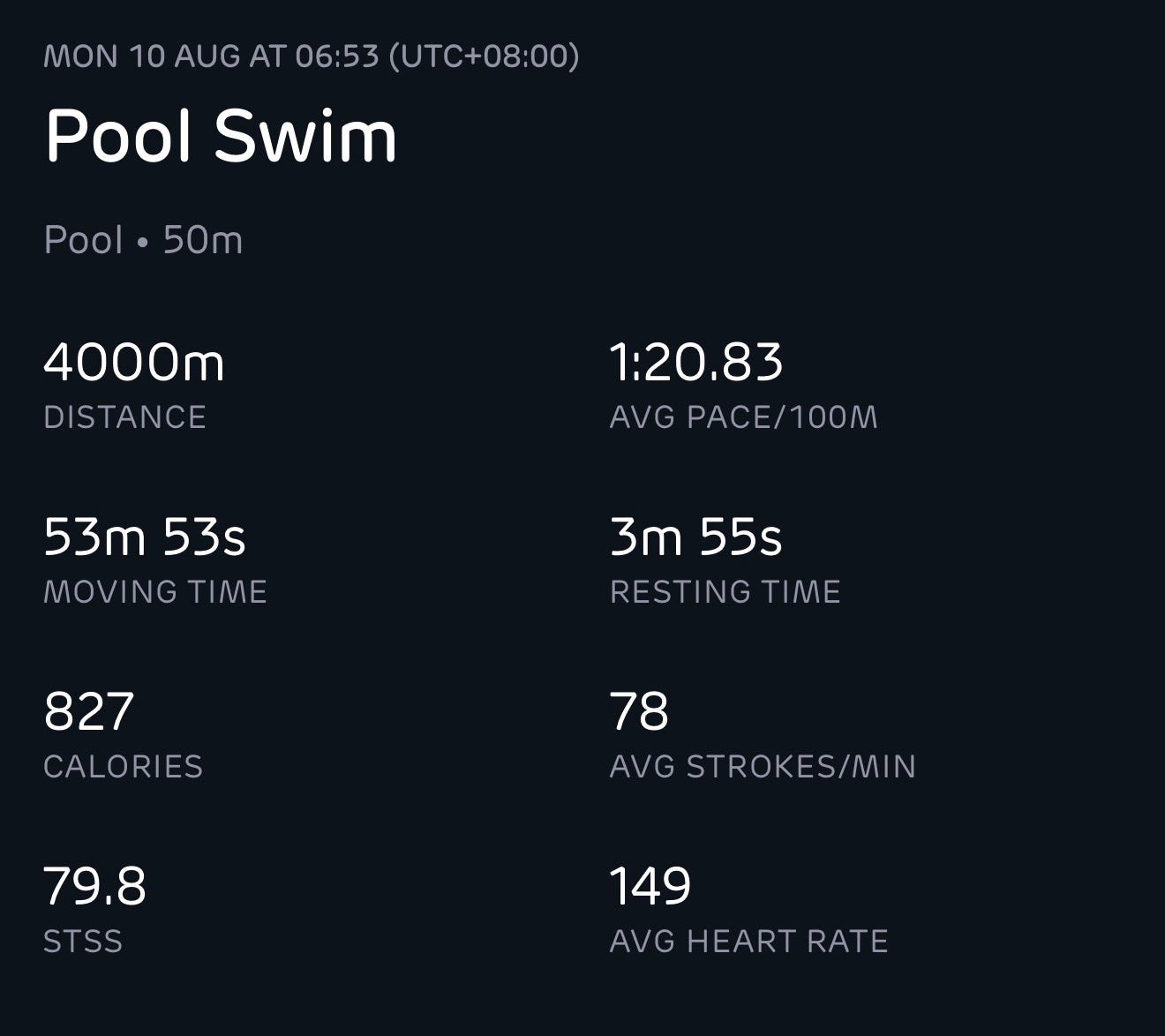
Last week I swam 4,000m in 53:50, averaging 1:20.76/100m. Today: 53:53 and 1:20.83/100m.
Essentially identical:
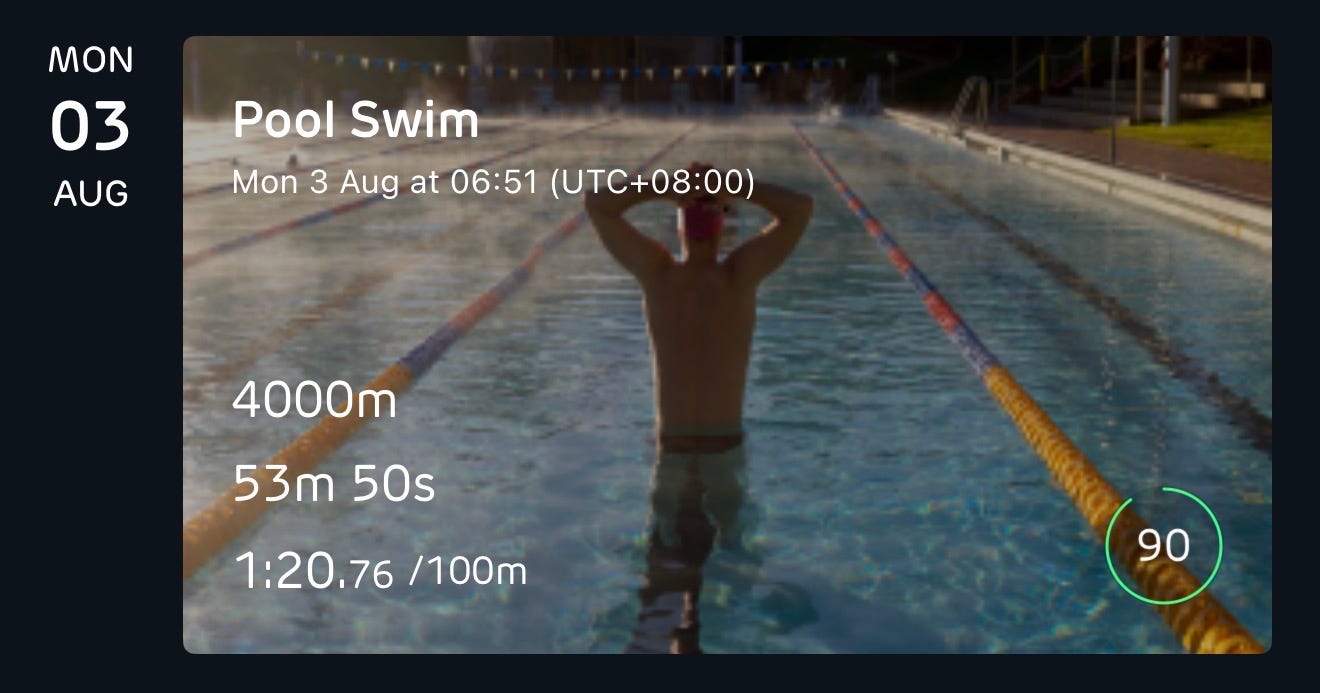
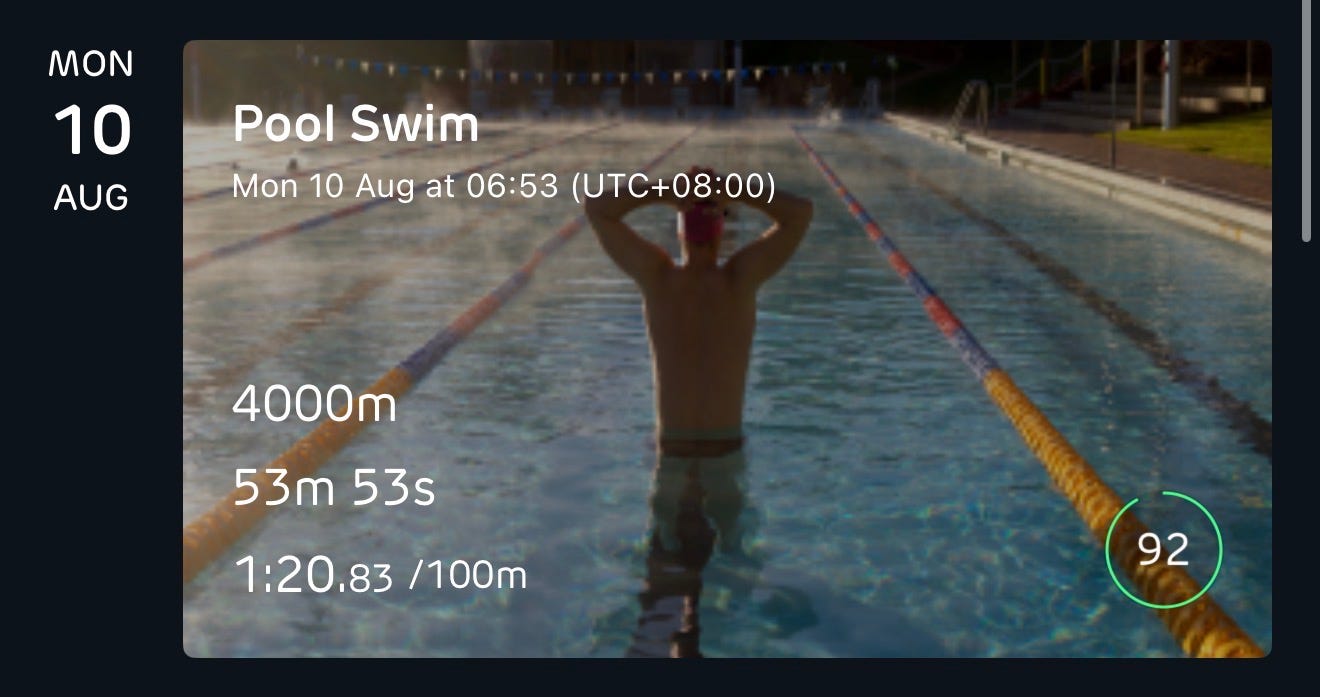
But look underneath the headline numbers and something interesting happened. My average heart rate dropped from 154 to 149bpm, my pacing score improved from 90 to 92, and I took 45 seconds less total rest.
I wasn’t faster.
I was better.
And that’s an important distinction.
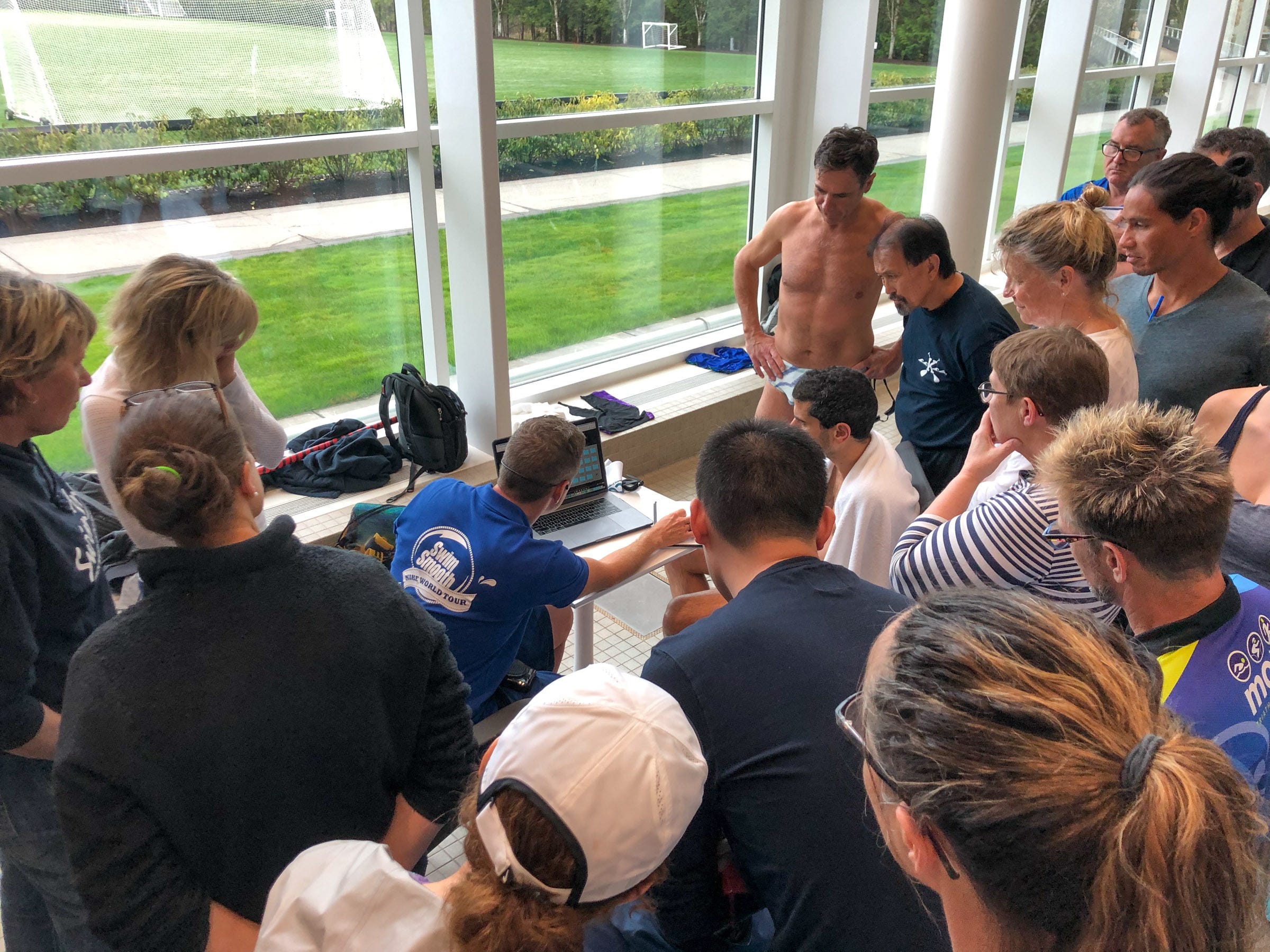
One of our swimmers, Laurie, told me on the pool deck this weekend that these blogs had inspired him to add a couple of extra swims each week. That genuinely made my day right before my own 5km endurance set, because this isn’t about everyone chasing some arbitrary performance number. It’s about finding your own next achievable step.
Eventually, rapid improvements slow down. When they do, don’t immediately force the next jump.
Hold the pace. Improve the execution. Lower the effort. Pace it better. Feel more comfortable.
Sometimes progression is about moving forwards. Sometimes it’s about making where you already are feel easier.
This week, I’m consolidating.
Maybe you should too - our certified Swim Smooth Coaches are experts at helping you define what stage of the “journey” you’re currently at:
Thanks for reading,
Your coach,
Paul

