

Hey Swimmers!
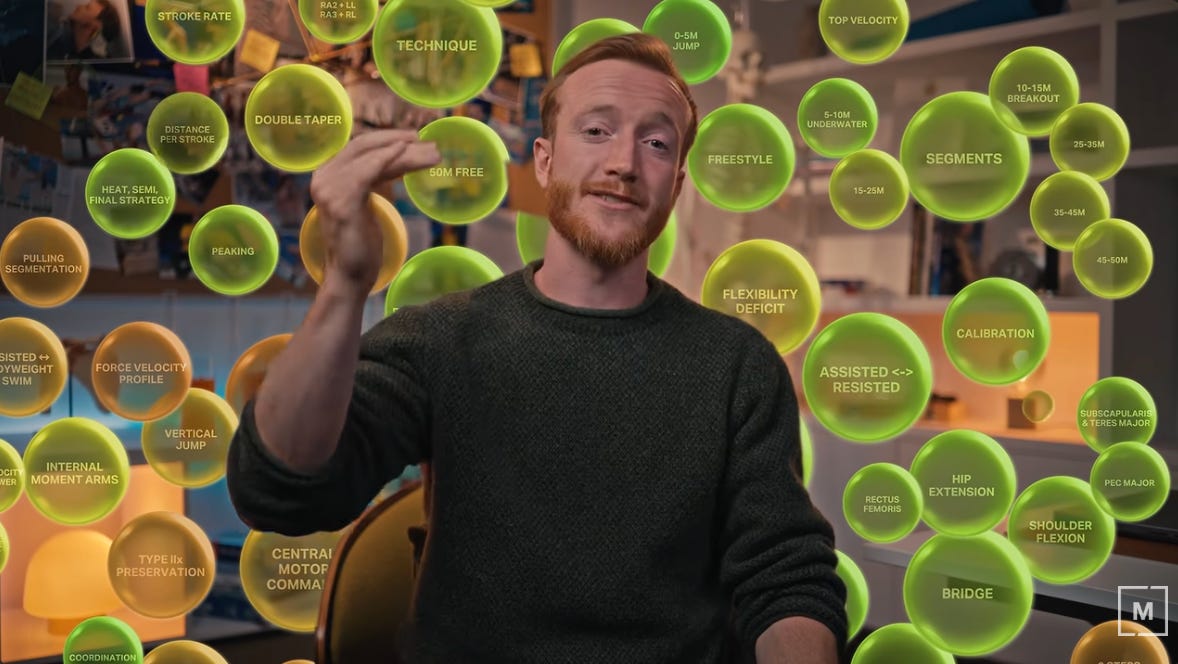
Last weekend, after a solid 5km training session, I sat down to watch a one-hour documentary about Cameron McEvoy’s extraordinary journey to becoming the fastest 50m freestyle swimmer in history.
Quite simply, it’s one of the best swimming documentaries I’ve ever watched. I cannot recommend it highly enough! In fact, I let three mugs of Yorkshire’s finest brew go cold I was so engrossed (and that’s saying something!)
🎬 Watch the full documentary here
Much has been made of McEvoy reducing his swimming volume from 30km per week to just 3–4km. The media loves a headline like “Olympic champion trains 90% less than his rivals!”
But that rather misses the point.
McEvoy isn’t simply training less. He’s training incredibly specifically - with enormous attention to strength, power, mobility, biomechanics and genuine race-pace execution. The work is still exceptionally demanding; it’s simply targeted towards what a 50m freestyle specialist actually needs.
And here’s something interesting: this isn’t entirely new.
Back in the late 1990s, I shared the pool at Bath University with former world record holder Mark Foster, whose unconventional training philosophy was remarkably similar. As I discussed in my March blog about McEvoy1 and my recent book review featuring Mark’s autobiography2, this approach helped Mark enjoy an extraordinary career spanning five Olympic Games.
What time of day do you swim best?
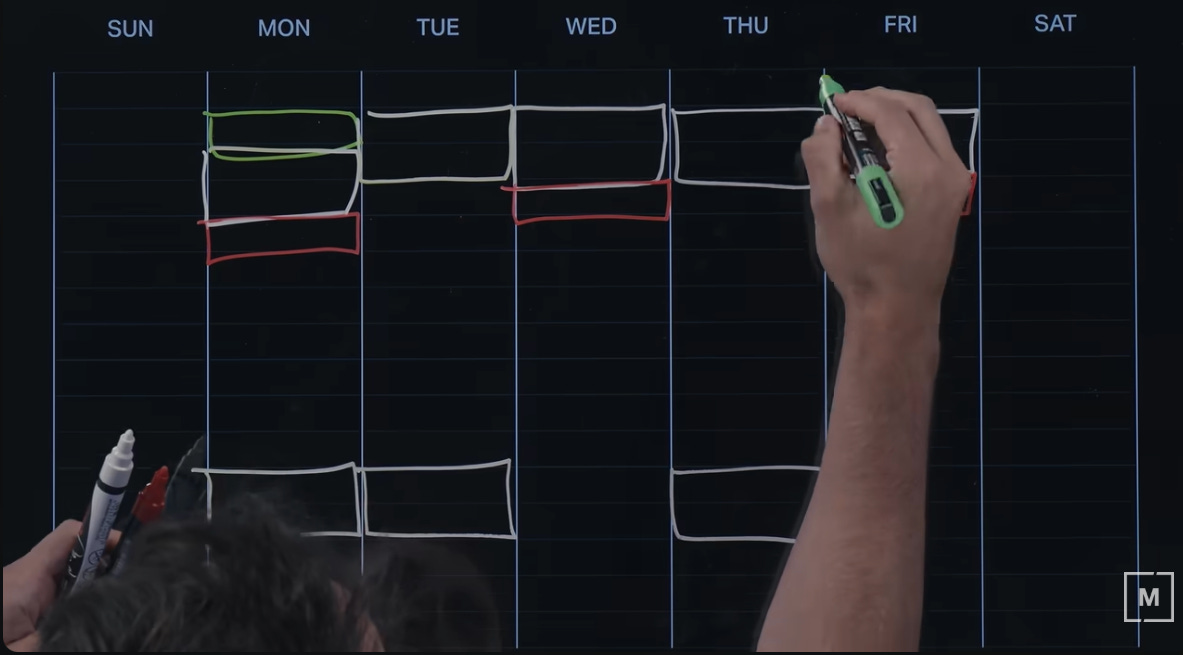
Another fascinating insight from the documentary is McEvoy’s decision to shift his key training sessions away from the traditional early morning slot towards the late afternoon and early evening.
This ties beautifully into our diurnal (circadian) biorhythms - the natural fluctuations in alertness, body temperature, strength and physical performance throughout the day. Ever wondered why you sometimes feel like a completely different swimmer at 6pm compared to 6am?
There’s a reason for that!
And here’s another interesting twist: Olympic swimming finals are traditionally held in the evening, potentially favouring athletes whose bodies are accustomed to performing at their best later in the day.
But not always!
At both the Beijing 2008 and Tokyo 2020 Olympics, swimming finals were controversially moved to the morning to accommodate American prime-time television audiences. Imagine spending years fine-tuning your preparation for an evening final, only to have the schedule dictated by broadcasting priorities!
It’s another brilliant reminder that when you train can sometimes be just as important as how you train. Particularly when preparing for a specific competition.
The real lesson? Specificity.
It’s something we’ve always championed at Swim Smooth:
Coach the swimmer, not the stroke!
Understand the individual, identify what they actually need, and prescribe training and technique improvements accordingly.
And please, don’t interpret this documentary as permission to slash your distance-swimming volume by 90%! Your demands are entirely different.
Want to experience this approach for yourself?
This philosophy is precisely what underpins our Swim Smooth Experiences - small-group, highly personalised coaching camps where we use detailed video analysis, individual stroke correction and targeted training to help you discover what will make the biggest difference to your swimming.
We’ve got two exciting new Experiences coming up:
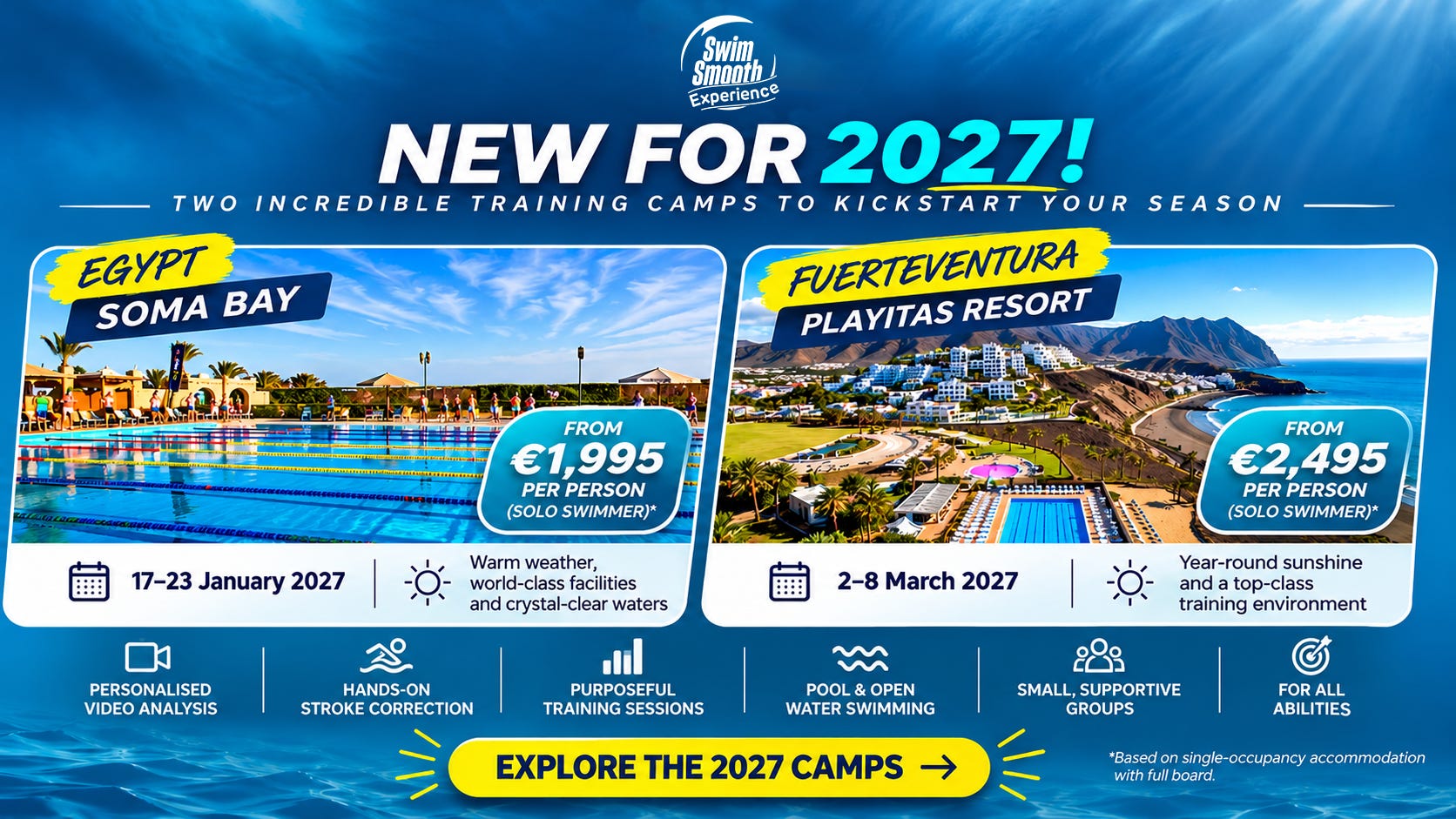
🇪🇬 Soma Bay, Egypt | 17–23 January 2027 - from €1,995 for a solo swimmer.
🇪🇸 Playitas, Fuerteventura | 2–8 March 2027 - from €2,495 for a solo swimmer.
Applications close on 30 November, and with January just around the corner, now really is the time to register your interest and reserve your place!
👉 Explore our Swim Smooth Experiences and apply here
In the meantime, do watch McEvoy’s documentary. It’s a brilliant reminder that better swimming isn’t necessarily about doing more - it’s about doing what’s right for you.
I’d love to hear your thoughts, either in the comments below or directly beneath Matt Smith’s fantastic documentary on YouTube.
Happy (Specific) Swimming!
Your Coach, Paul.


