

To grab your spot, register here.
Hey Swimmers,
Well… that was a week.
Thirteen hours before the gun was due to go, the 2026 Rottnest Channel Swim was officially cancelled.
If you were tapering, carb-loading, laying out your kit, nervously checking Windy every 20 minutes… you’ll know exactly how that felt.
Flat.
Frustrating.
A bit surreal.
And yet — hand on heart — it was the right call.
Let’s unpack it properly.
The What: How Bad Was It Really?
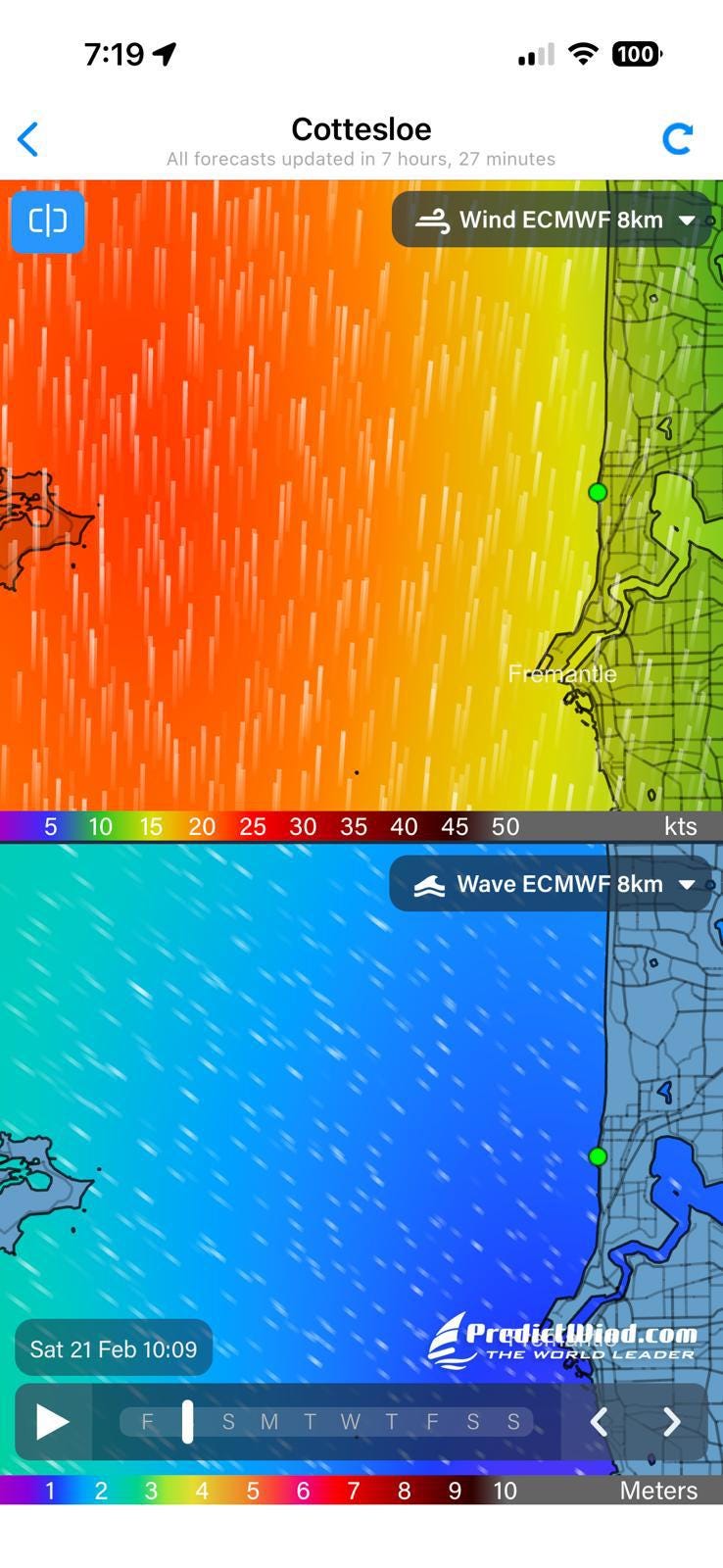
I’ve got a weather heatmap here showing how the forecast deteriorated the closer swimmers would have got to Rottnest. The further west you went, the more it ramped up. Not marginal. Not “a bit lumpy.” Properly building.
Saturday’s Suck!
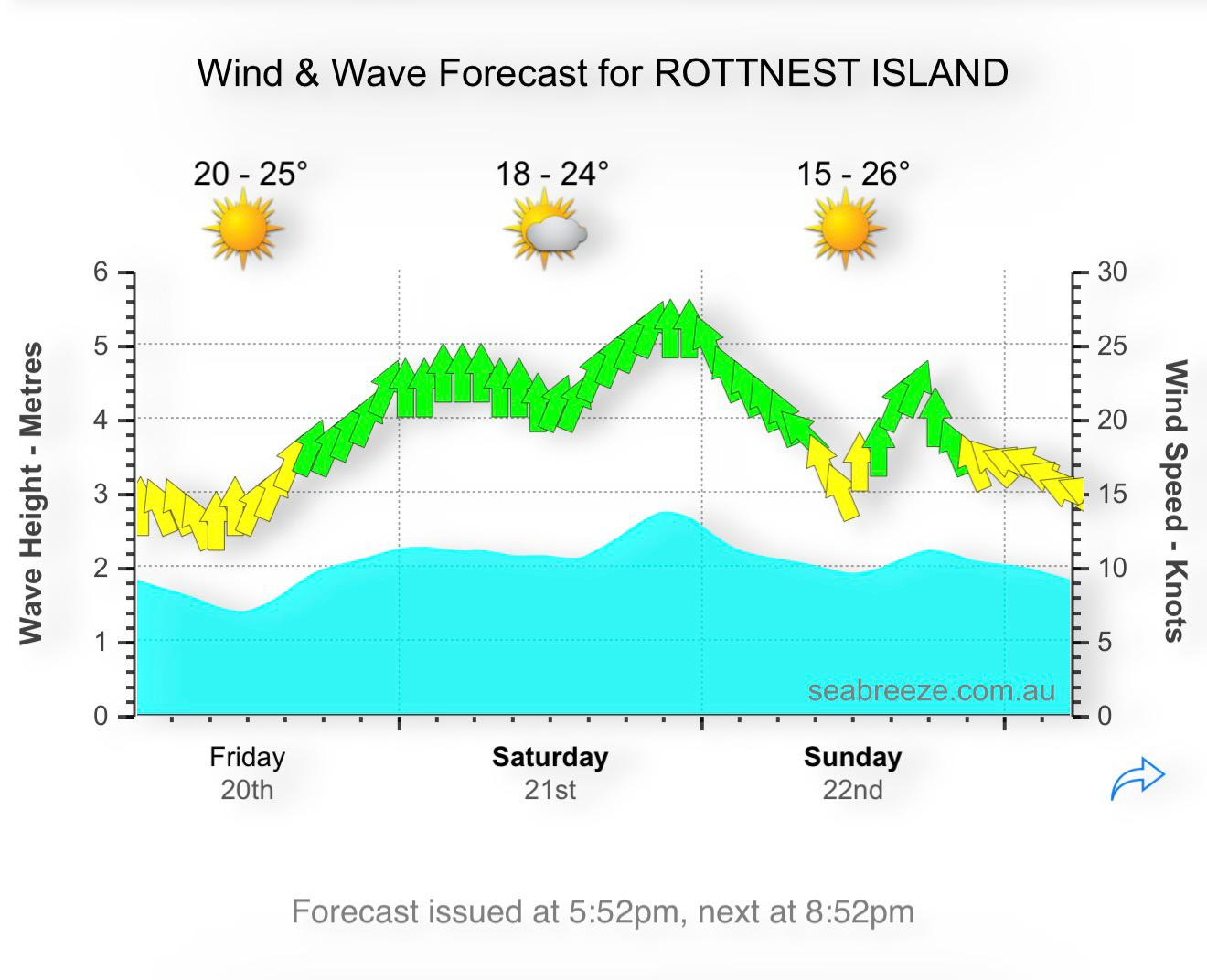
The Saturday 21 Feb forecast showed winds strengthening right through the morning. And interestingly, when you look at this coming Saturday 28 Feb, the pattern is almost identical:
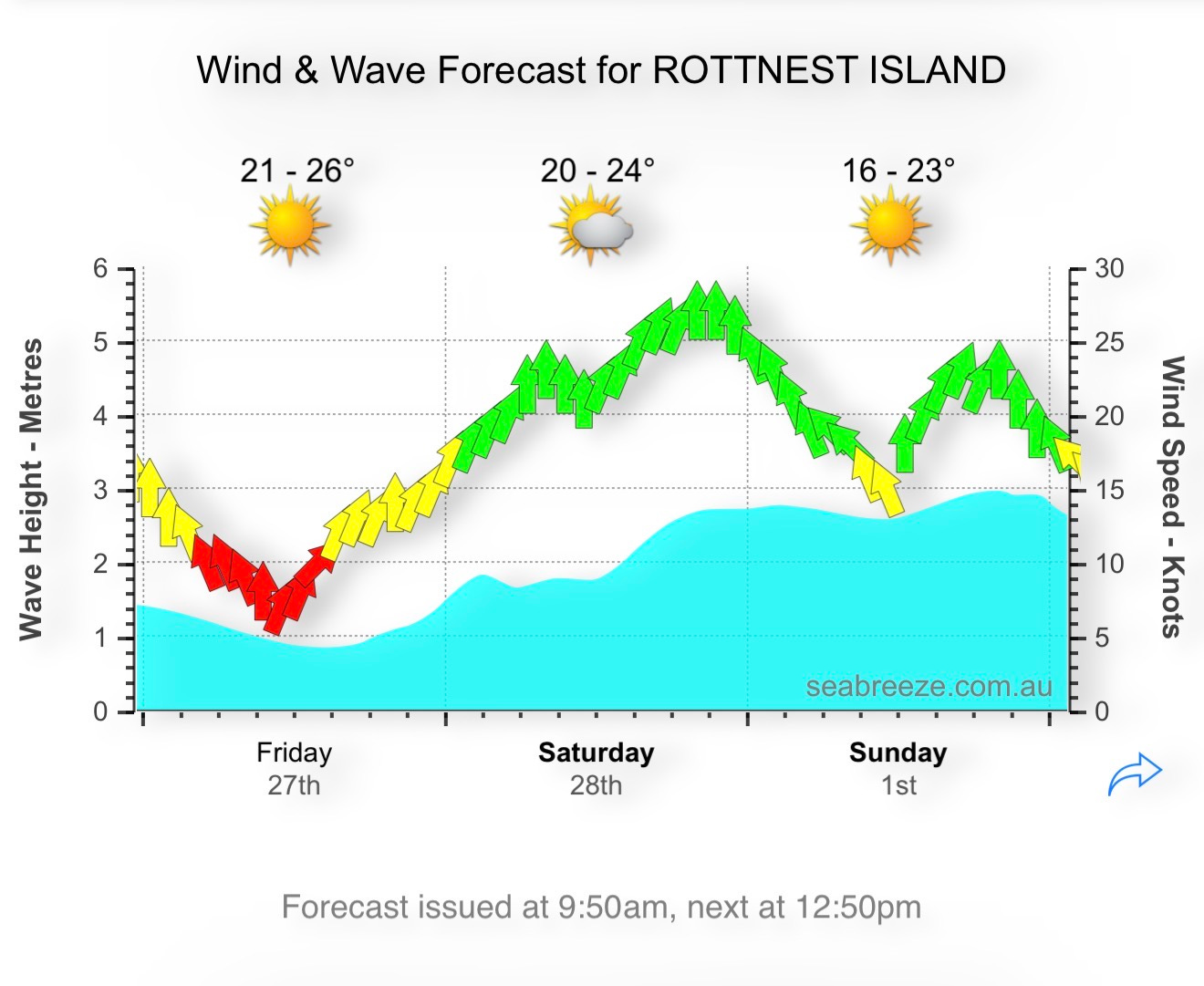
That’s the thing with Perth in late February — you often get that same build pattern week after week.
So pushing it back a full weekend? Logistically horrendous for interstate and overseas swimmers… and not necessarily any better.
Could a day either side have worked? Possibly. But that’s where the shipping channel closures, marine logistics, and cost realities come into play.
I’ve spoken before — including in that Instagram video from 2024 when the race was stopped after 8km — about contingency planning:
Three ideas I still stand by:
1️⃣ Build flexibility into event dates. Listen to experienced marathon swimmers and meteorologists. If it means a $100–$250 surcharge to create a weather window buffer, I reckon most swimmers would cop that for greater certainty.
2️⃣ GPS tracking for every swimmer and paddler. Safety first. And imagine the buzz at Thomson Bay watching your loved one live on the big screen.
3️⃣ Start slower solo swimmers first. Conditions almost always worsen as the day goes on. Data-driven start waves would make it fairer and safer.
…and…potentially bringing the race forwards to the end of January - our Shore-2-Shore event has had idyllic conditions for the last 3 years in a row…not for 1 day, or 2, but all 3 days, 3 years in succession. Just a thought.
These ideas aren’t theoretical. They are born from years of watching how quickly the channel can turn.
The Why: Why This Year Was Different
Some people have asked, “Was it really that bad?”
Go and watch Mike Harlan’s Facebook video set to Enter Sandman. It’s not dramatic music for effect. The footage speaks for itself. White caps. Confused seas. Boats pitching:
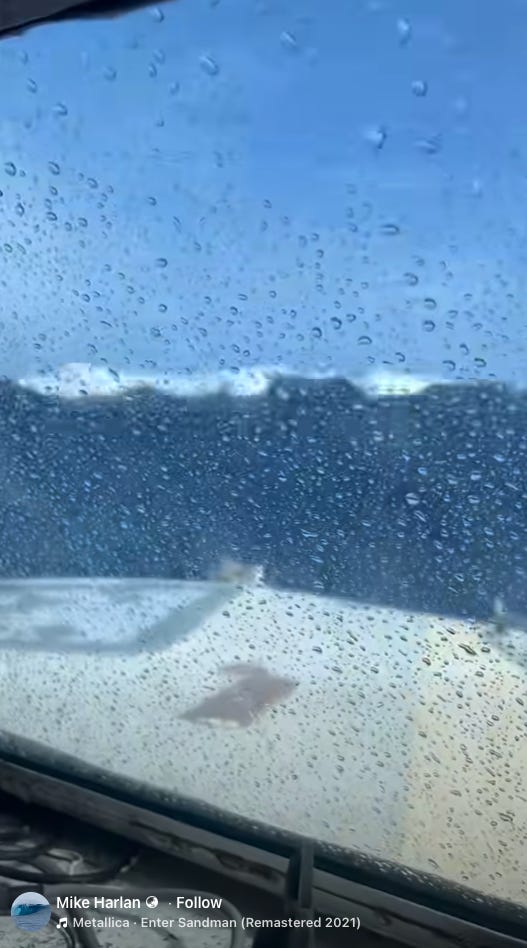
See the full video here - it’s terrifying!
Now layer in 1,000 boats.
Not planing at speed.
Not manoeuvring freely.
But idling. Drifting. Correcting. Avoiding each other.
That’s the risk multiplier.
I swam the English Channel in 2011 in similar conditions. Fourteen degrees. Double the distance. It was brutal and three hours slower than I expected:
But I was one boat. One swimmer. Clear water around me.
That is very different to a flotilla of 1,000 vessels trying to hold course in deteriorating conditions.
Which is why — much as I would have preferred the call to be made on Thursday — I was deeply relieved when Race Director Rob Herkes fronted up at 4pm Friday with that heartfelt video explaining the decision:
Rob’s PR that afternoon was exactly what the event needed. Honest. Measured. Human.
All week, there had been tension. Interviews that felt cautious, ambiguous and even verging on ‘politician-like’:
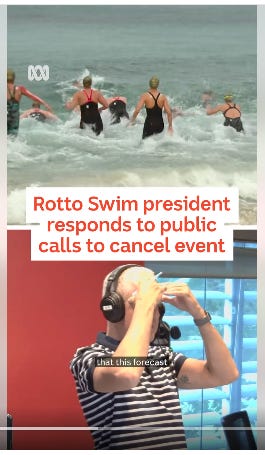
Concerns about launching a thousand boats only to potentially abort. It was all simmering. The ABC news channel ran with it and it even made front page news on the West Australian newspaper on Friday.
And for the first time in 25 years of coaching thousands for this event, I wasn’t the usual voice of “we’ll be right.”
I was quietly worried.
My son was due to skipper for a duo from Bondi — the Bondi Salt Sisters. Our little boat would not have handled those conditions. I’ll admit it: I spent the week fretting.
When the cancellation came, disappointment and relief arrived in equal measure.
The Proof: The Route Optimiser Doesn’t Lie
One tool that proved invaluable this year was the official Rottnest Channel Swim Route Optimiser.
I’ve talked about it before on this blog. It’s brilliant.
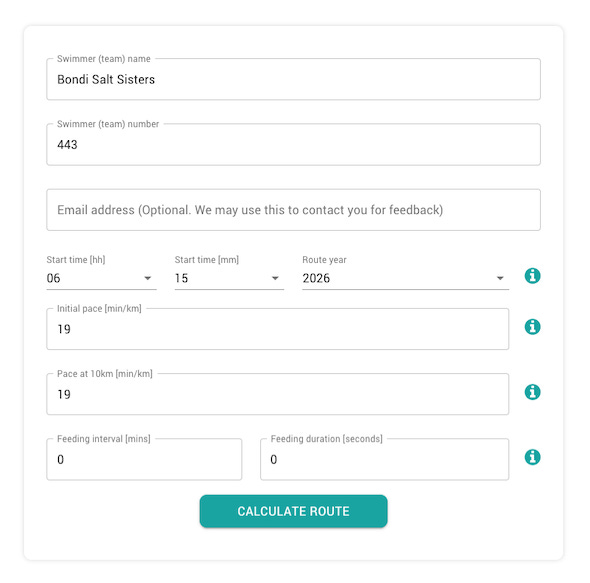
You plug in:
Starting speed
Midway speed
Start time
And it overlays weather and current predictions to generate the optimal GPS trace and predicted finish time.
When we ran the numbers for the Bondi Salt Sisters at their projected pace, the Optimiser showed they likely wouldn’t have reached the island inside the 10h30m cutoff.
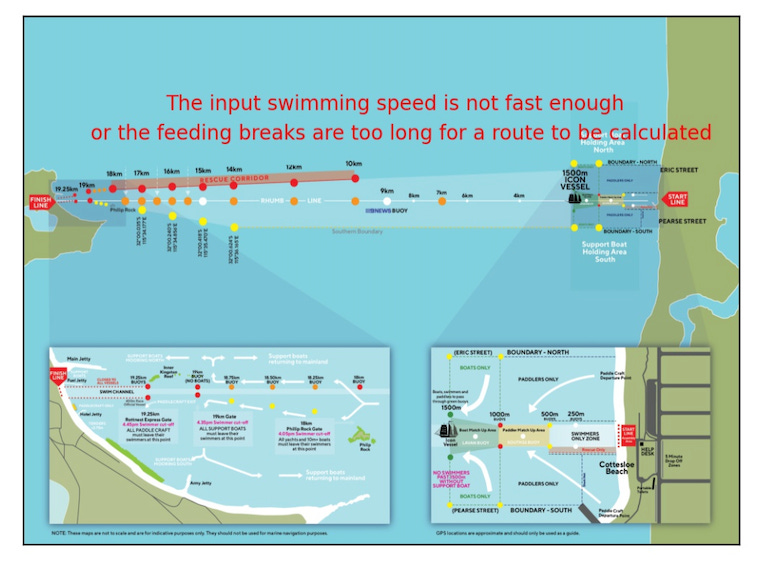
Contrast that with 2018 — a notoriously good year — where the same inputs predicted sub-5h45m crossings.
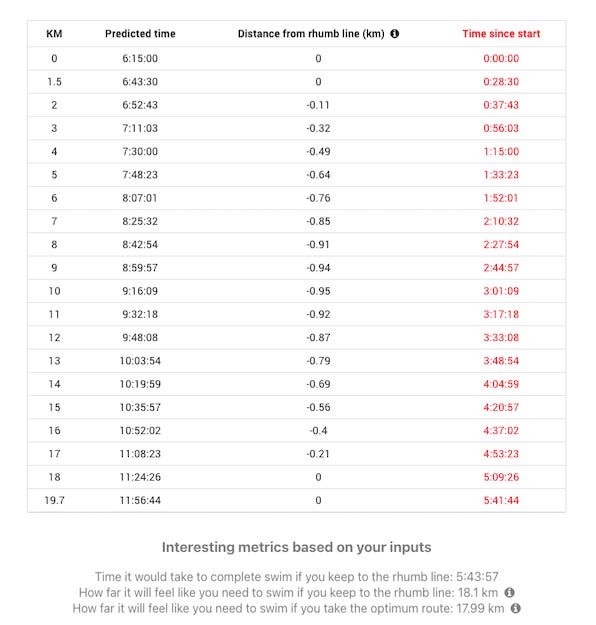
That’s the difference conditions make.
This wasn’t just “a bit harder.”
It was potentially unfinishable for many — and dangerous for some.
The Bigger Picture
Interestingly, Port to Pub next month is now at full capacity, having benefitted from the cancellation. They also offer optional insurance on entries — a clever move in an increasingly competitive event landscape.
These are realities event organisers now face.
Swimmers are investing serious money. Travel. Accommodation. Boats. Training.
Which is why these conversations around flexibility, forecasting, and insurance aren’t trivial — they’re strategic.
The Rough… and the Smooth
Now, let’s talk about you.
Because that’s what matters.
If you trained for months:
Early mornings
Cold swims
Long Saturdays
Missed social events
Dialled-in nutrition
That work is not wasted.
I re-posted that slightly tongue-in-cheek Instagram video about reframing after a DNF or cancellation. There’s truth in humour:
Here’s the reality:
You are fitter.
Stronger.
More resilient.
More disciplined.
The event didn’t happen.
But the transformation did.
And right now, at the tail end of open water season in WA, the worst thing you can do is slam the door shut emotionally and physically.
If you’re not doing Port to Pub, the smartest move is this:
Maintain momentum.
Not full throttle.
Not another taper.
Just enough structure to carry what you’ve built into winter.
Because 2027 will come around quicker than you think.
And when it does, you’ll either be rebuilding from scratch… or building from strength.
My Candid Take
Was I disappointed? Of course.
Would I have preferred an earlier call? Yes.
But standing there on pool deck this week, I also felt proud.
Proud of swimmers who handled it with maturity.
Proud of crews who made safety the priority.
Proud of a community that, by and large, understood that sometimes the ocean wins.
You’ve got to take the rough with the smooth.
That’s not just a catchy line.
It’s the essence of open water swimming.
The tide turns.
The wind shifts.
Plans change.
But character? That’s forged in weeks like this.
So regroup.
Watch the footage.
Learn from it.
Keep perspective.
And remember — your best swim might still be ahead of you.
Get swimming. Your coach, Paul.
