You Can’t Control the Weather. You Can Control Your Response.
Letting go this week amidst the chaos that's unfolding in the middle-east.
Hey Swimmers,
It has been hard to ignore the events unfolding in the Middle East this week. Beyond the headlines, the ripple effect has been significant. Flights grounded. Routes diverted. Plans disrupted. Thousands of people suddenly forced to pivot.
I found myself caught up in it on Sunday.
I was due to fly Perth to Doha, then London, then onward to Lanzarote for our coaching camp. By mid-morning it was clear that cancellations into and out of Doha were inevitable. I spent a long, tense day refreshing apps, checking alerts, trying to stay one step ahead of what felt unavoidable.
At one point I even considered heading to the airport anyway, just in case.
Then my pre-booked Uber stopped 600 metres from my house and didn’t move again. No explanation. No progress. Just stuck.
That felt like a sign.
Safety over stubbornness.
I cancelled the ride. Cancelled the airport trip. Cancelled the stress of trying to force something that clearly wasn’t going to happen. Instead, I rebooked via Hong Kong, which ultimately got me smoothly to London and now onwards to Lanzarote.
The big difference this year? Margin.
After the lessons from last year’s camps, I built buffer time into this trip. No razor-thin connections. No zero-room-for-error scheduling. And I was very glad I did.
Later that afternoon I came across a simple Japanese phrase:
Shikata ga nai.
It cannot be helped.
Not defeat. Not resignation. Acceptance.
So instead of sitting at home spiralling, I walked down to the beach. I slipped into the water for an easy 500 metres. Then I rolled onto my back and simply floated. A few slow breaths. No watch. No pace. Just quiet.
Coffee afterwards. Perspective restored.
The world felt calmer. Even though it wasn’t.
Here are three ways you can apply this mindset to your own swimming when things feel chaotic:
1. Stop Fighting the Water
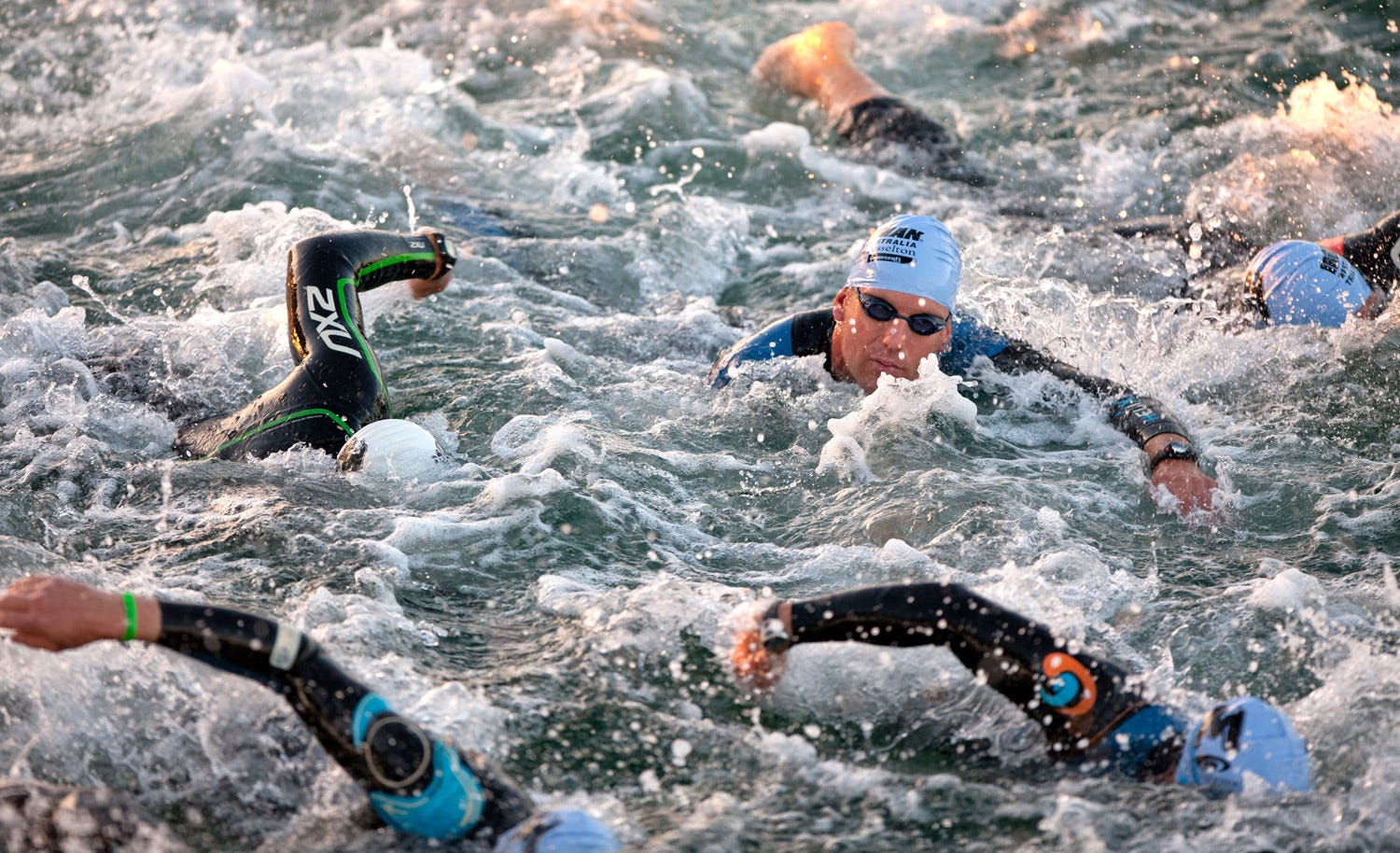
If conditions are rough, crowded, or not going to plan, forcing it rarely helps. In open water especially, fighting chop or current just drains energy. Adjust your stroke, shorten slightly, lift your rhythm, breathe more often if needed.
Acceptance in swimming is intelligent adaptation, not giving up.
2. Build Margin Into Your Training…and J.K.S (Just Keep Swimming!)
Leave buffer in your week. In your sessions. In your pacing.
If every swim has to be perfect, fast, and tightly scheduled, stress compounds quickly. But if you allow room for life to happen, illness, travel, fatigue, then one disrupted session doesn’t derail everything.
Consistency thrives on flexibility.
3. Float When You Need To
Sometimes the best thing you can do mid-session is roll onto your back, take a few calm breaths, and reset.
You are not weak for doing so. You are smart.
The ability to downshift your nervous system is a skill. It is one of the great hidden performance advantages in endurance sport.
We cannot control geopolitics. We cannot control flight paths. We cannot control the weather.
But we can control how tightly we grip things.
Acceptance is not surrender. It is choosing peace over resistance.
If the world feels loud this week, take a quiet swim. Let the water hold you for a few minutes. Breathe. Reset.
Then carry on.
Get swimming. Thanks for reading,
Your Coach, Paul


