

Hey Swimmers
During our recent Swim Smooth Experience in Crete, I slipped into the beautiful 50-metre pool between coaching sessions for an experiment:
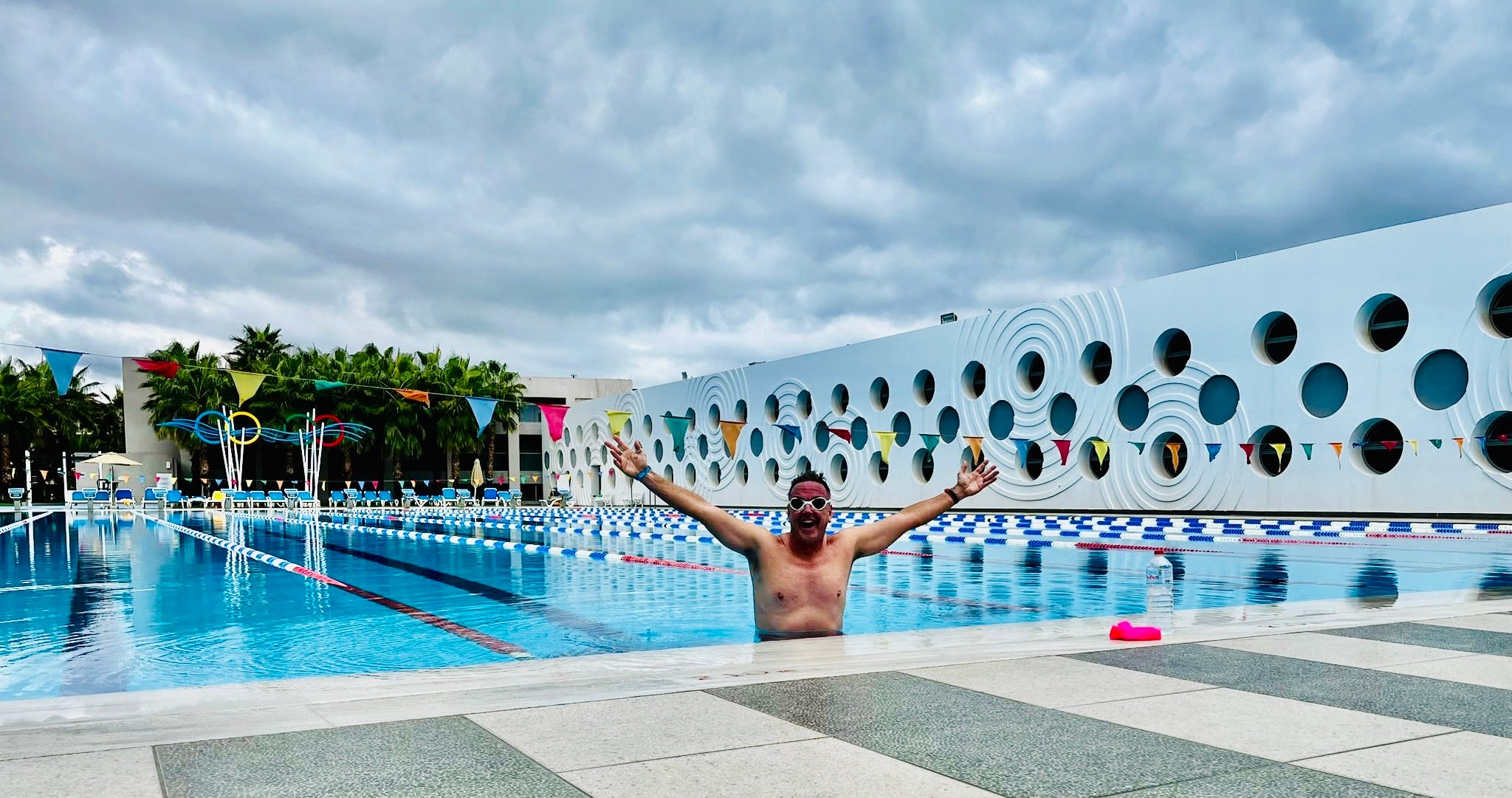
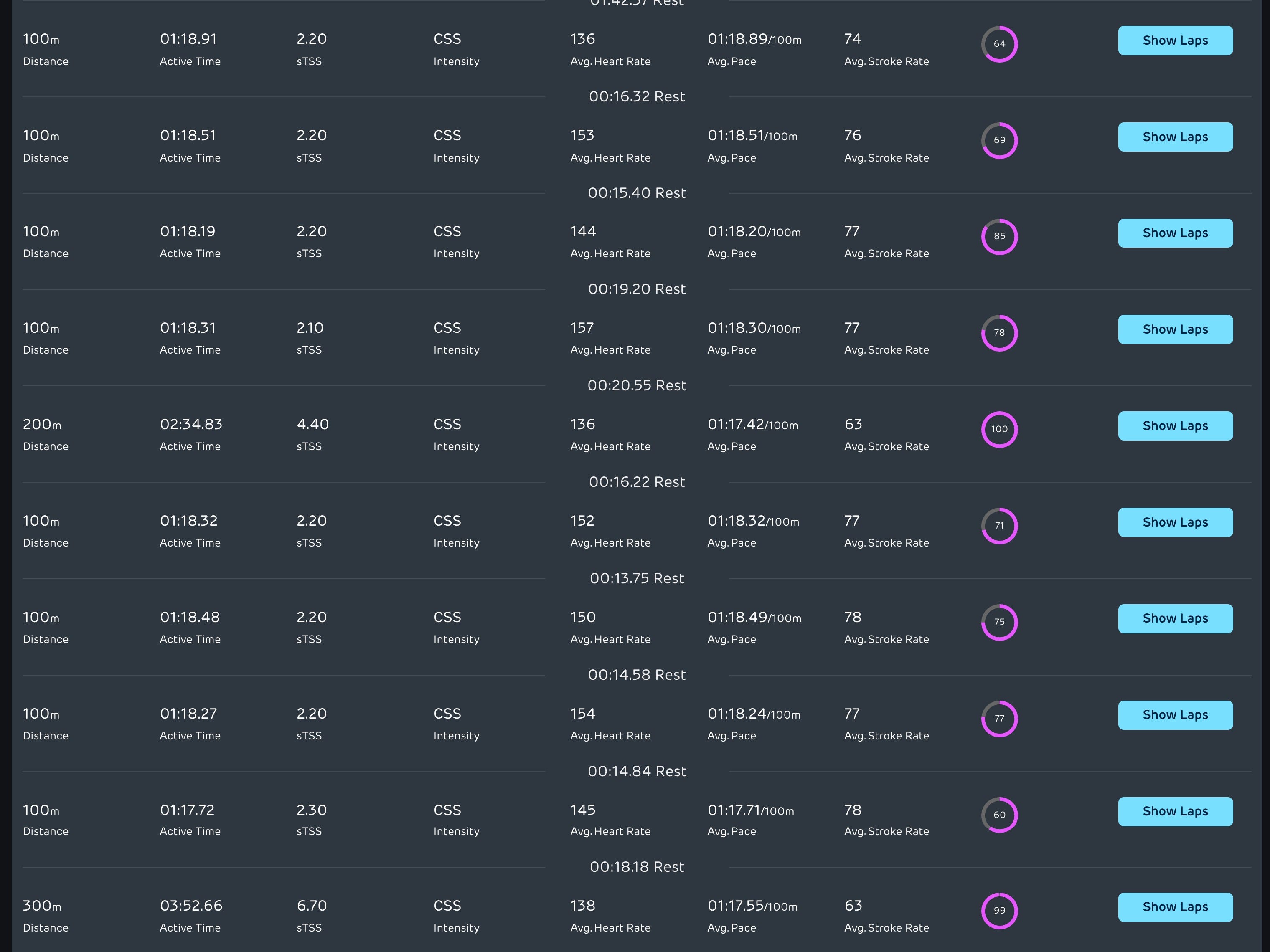
Feeling tired but wanting a worthwhile workout, I chose the Goldilocks set: 4 × 100, 1 × 200, 4 × 100, 1 × 300, 4 × 100, then 400 metres. Everything at CSS pace, with 10–15 seconds’ rest between swims. This is a set I’ve done a gazillion times before.
Following my 2nd place overall at the UltraSwim 33.3 in Skopelos, I chose 1:18/100m, compared with 1:13–1:14 at my peak as I didn’t want to completely destroy myself and knew that I’d already come “off the boil”, so to speak.
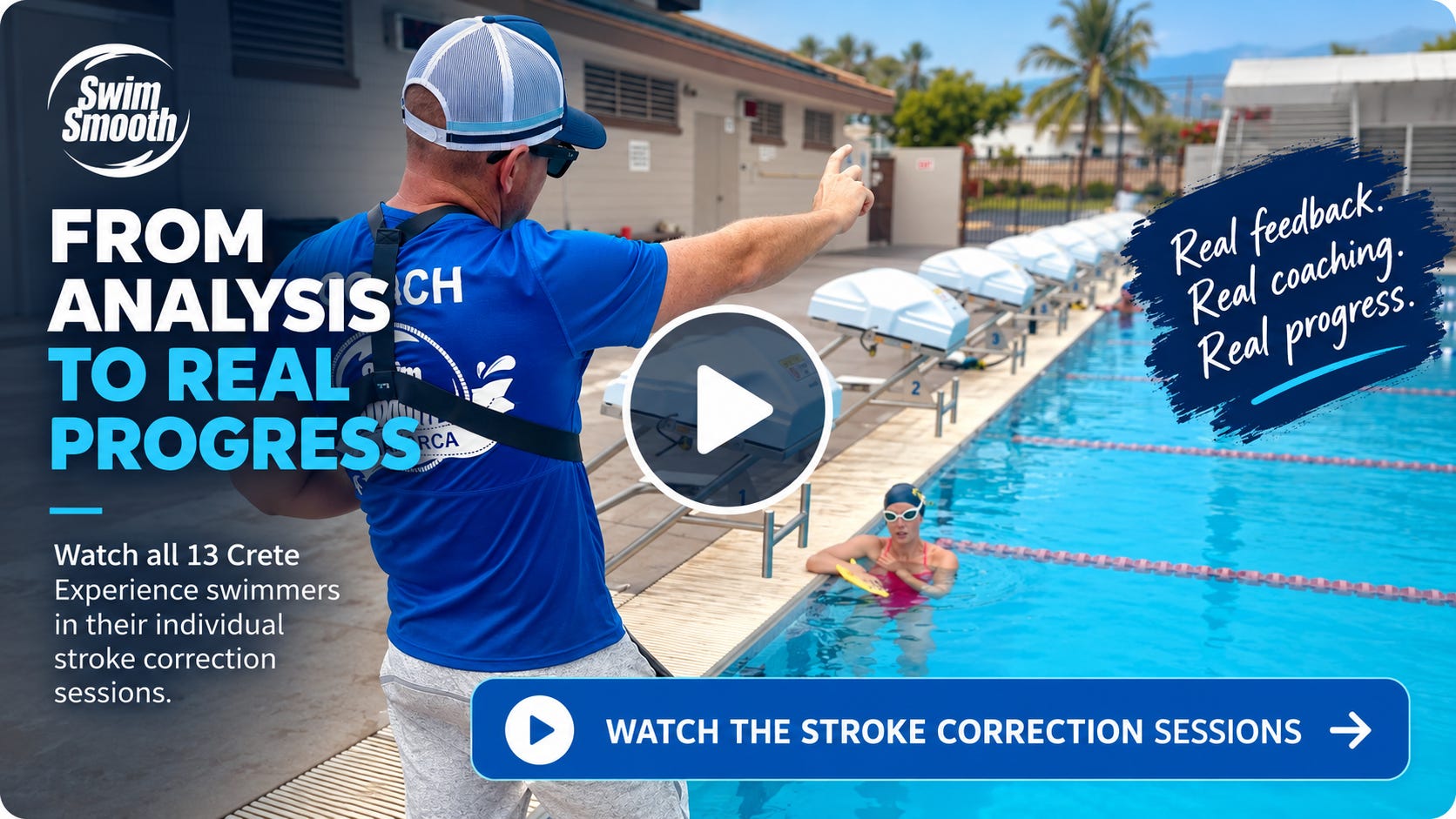
Take a sneaky peak at exactly how we help swimmers improve on these Swim Smooth Experiences1.
How Do Paddles Affect Stroke Rate?
The previous day, one of the camp swimmers had asked how paddles affect stroke rate. We were doing an exercise to manipulate everyone’s stroke rate to find out their sweet spot, and this interesting question came up. I explained that their larger surface area typically slows the arms down. I suggested perhaps 5–10 strokes per minute, but ever since I’d completed the 2018 Ötillö World Championships in Sweden I’d also become very much aware of how much it affects heart rate as well. So much so that, whilst Andy Blow was kicking my backside on the run, I tried to use the pull buoy and paddles in the swim sections to lower my heart rate and recover for the next brutal run section. I guess it worked for a while, but ultimately, Andy just totally smashed me and it all became hard!
Anyway, back to my little experiment; I swam the 100s without equipment and the longer intervals with pull buoy and paddles. My FINIS Tempo Trainer kept the pace identical.
Without gear, my heart rate reached 155–163 bpm, with a stroke rate of 74–78 strokes per minute.
With pull buoy and paddles, heart rate dropped 15–20 bpm, despite the longer intervals. Stroke rate fell into the mid-60s:
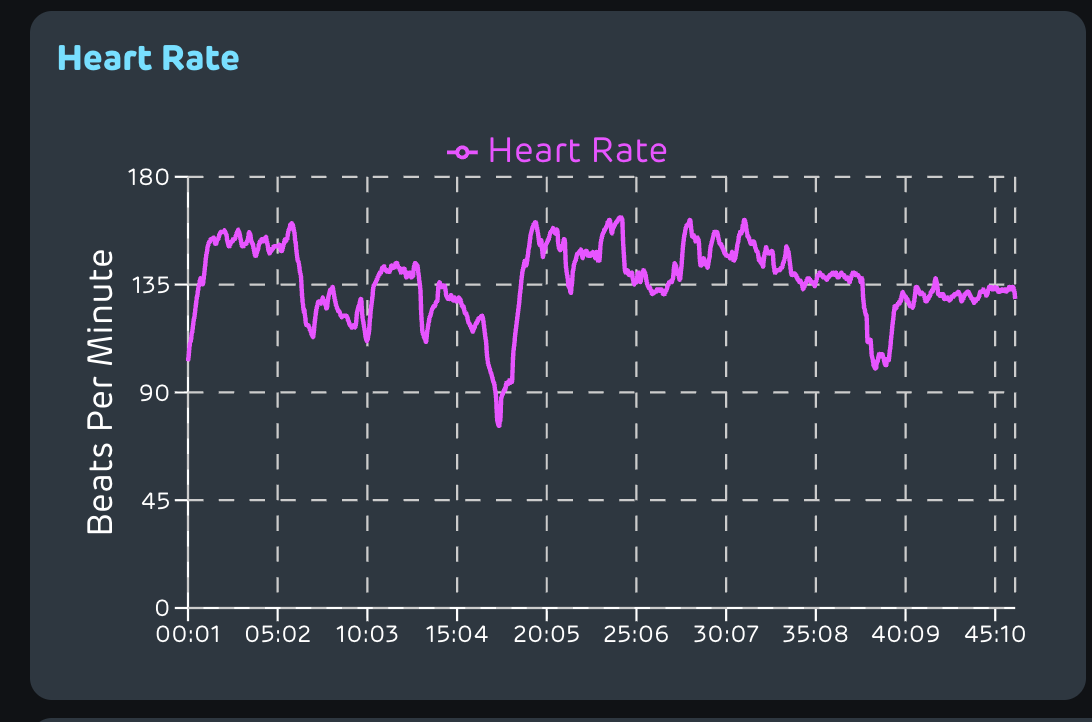
Same pace. A significantly different physiological session.
A threshold session aims to develop your ability to sustain a demanding aerobic effort. If adding equipment substantially reduces that effort, you’ve changed the training stimulus completely - even when every split looks the same.
Research supports this principle2: paddles can reduce the physiological cost of swimming at a fixed speed. Your response won’t necessarily match mine of course, and you certainly shouldn’t take my findings as gospel, but I’d encourage you to try this exact same experiment yourself.
Repeated week after week, this insight really matters. You might diligently complete every metre, yet repeatedly miss the aerobic stimulus the session was designed to deliver. Your commitment deserves better than having part of that effort squandered by a reassuring pace on the clock.
“But I race in a wetsuit!”
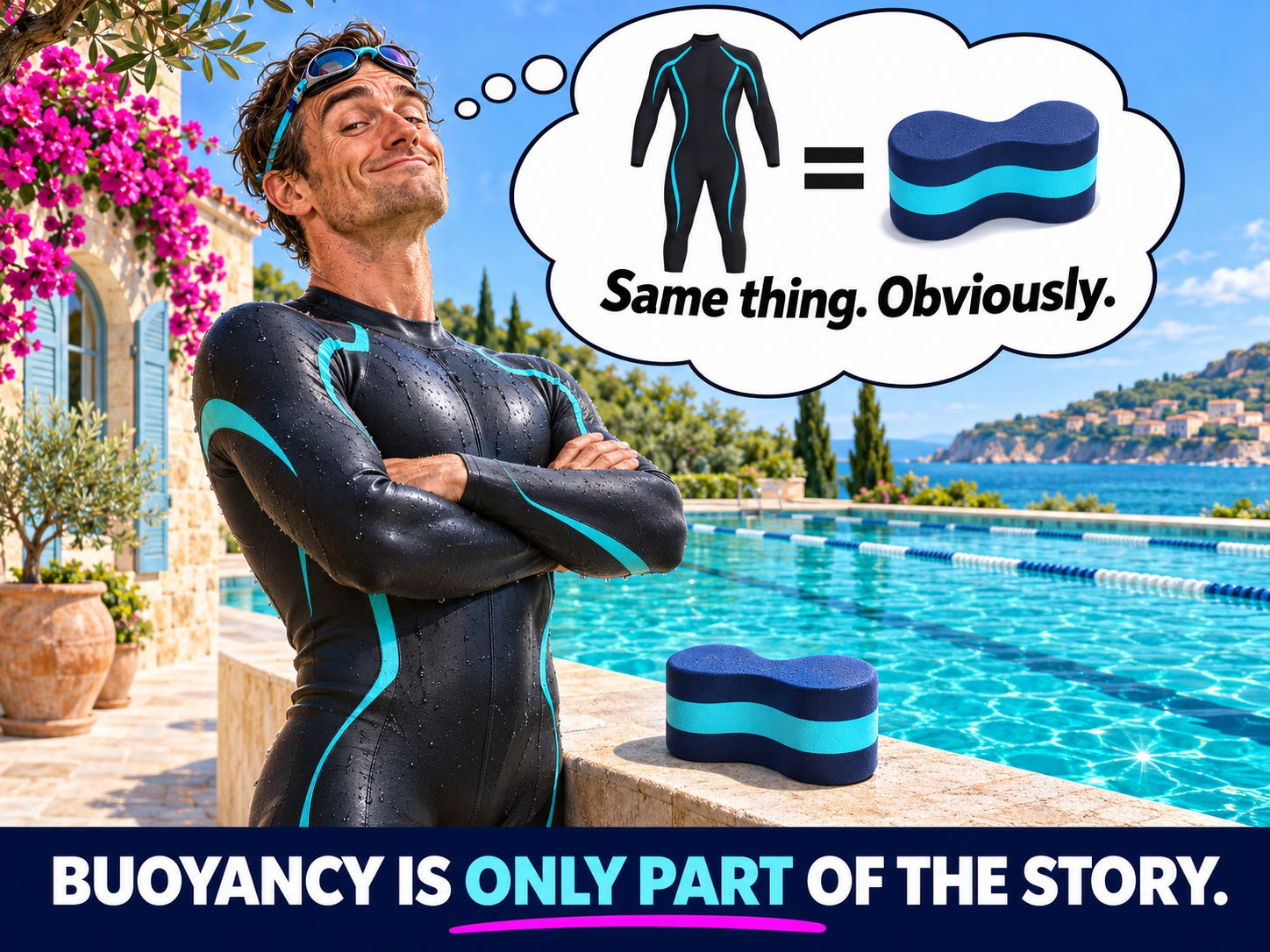
Yes, a pull buoy can simulate some additional buoyancy, but it doesn’t reproduce racing’s complete demands when in a wetsuit. Even if you think you don’t kick much when in your suit, your legs still contribute something above and beyond what you do when using the pull buoy and you still need the conditioning to sustain your pace.
I learnt this around 1993, preparing for a 1,500-metre race in France almost exclusively with pull buoy and paddles thinking I was making myself “stronger”. Removing the gear exposed the gap between my training and the effort racing required. When the gun went off, my heart rate and oxygen consumption skyrocketed and I performed terribly having eroded most of my aerobic conditioning in the false sense that my so-called “strength endurance” would get me through. It didn’t.
Compensating for this by swimming faster with equipment can of course raise the physiological demand and push you into a higher training zone, but this would often require you to be swimming significantly quicker, whereupon load through the shoulders then becomes the limiting factor. Most people I see simply add a pull buoy and paddles in at close to their normal CSS pace, but this then doesn’t preserve the session’s purpose at all.
In our humble opinion, it’s much better to take the ego hit: swim without gear in your key sessions (unless specifically called for), accept the appropriate lane or pace differential, and get the intended training benefit. Save pull buoy and paddles for specific sets designed to improve your catch and pull-through technique, or during recovery sets within a Red Mist Endurance session.
Try this 2,100-metre experiment:
4 × 100m normal freestyle, then 200m with pull buoy and paddles.
4 × 100m normal freestyle, then 300m with pull buoy and paddles.
4 × 100m normal freestyle, then 400m with pull buoy and paddles.
Warm up first. Hold CSS throughout, with 10–15 seconds’ rest after every swim. Set your Tempo Trainer per 25 metres, e.g. 19.50 seconds for 1:18/100m.
The Swim Smooth GURU shows average heart rate per interval, average and lap-by-lap stroke rate, and pacing consistency, so you can see the pattern clearly:
Created an account since 1 January 2024 but never subscribed? Your 7-day free trial has been reset, giving you another chance to explore these insights and give this experiment a proper go - all you need is a Garmin or Apple Watch.
New subscribers can also use BLACKFRIDAY27 for 33% off their first month or first year of Routine membership.
Try it this week and share your findings in the comments. Is your equipment helping you achieve the session’s aim - or quietly changing it?
Thanks for reading. Your coach, Paul.
Two questions pls :)
1) does your advice* stand also in the context of triathlon training? (where there are daily sessions of other sports too)? I am asking because coach Brett Sutton is a huge fan of paddles/ pullbuoy, with some impressive results in triathlon.
2) would you say that the thick neoprene shorts (like Lava Pants) solve the problem you mentioned about kicking in training too?