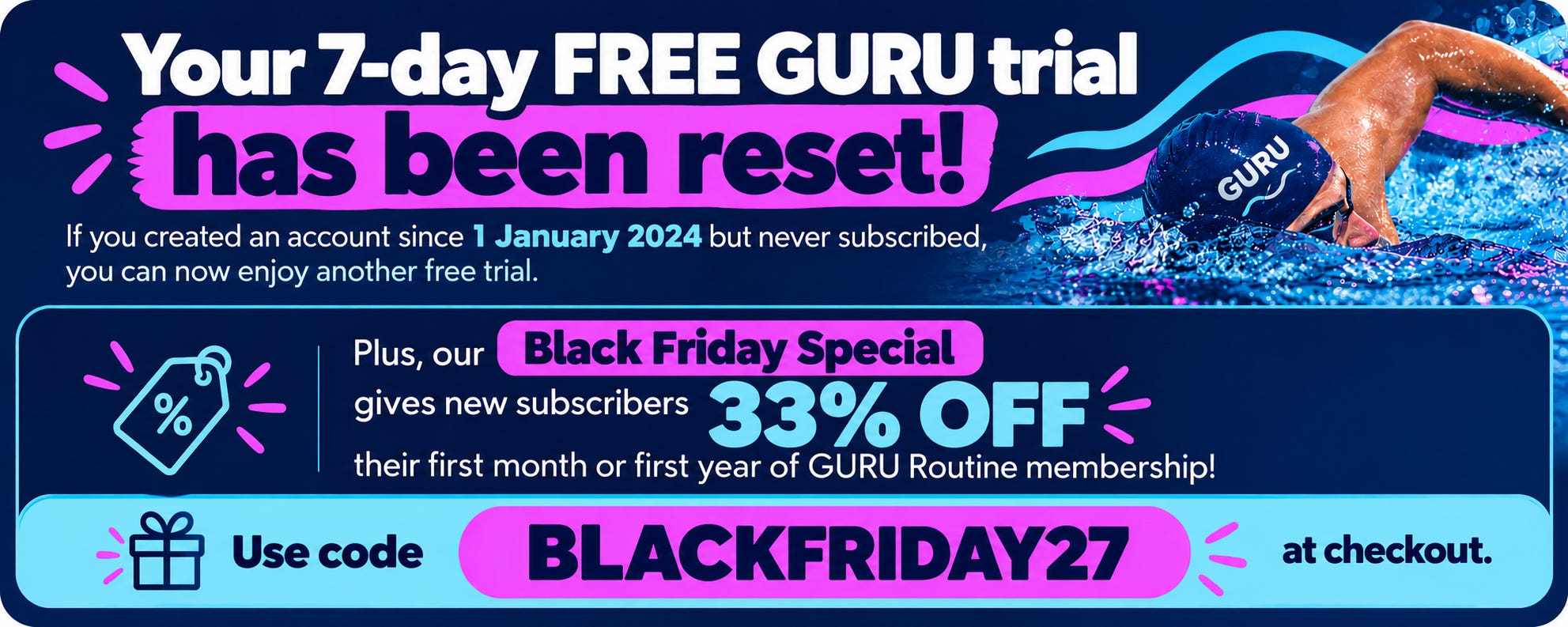
Save 33% on a Routine Membership to the Swim Smooth GURU this Black Friday!
Hey Swimmers
Last Thursday I managed to pull the pin on two swims before I’d done a single hard effort.
The first was a beautiful, easy, ocean swim. The second was our evening CSS development session. I got 1,000 metres into the warm-up, took stock at the wall and climbed out. Given how the morning had gone, you might reasonably ask what I was doing back in the water that evening.
Fair question. I’d have asked it of any swimmer I coach.
I spend a fair chunk of my working life encouraging swimmers to get comfortable with the hard bit. And for every email I get from someone who’s finally found their rhythm by putting a few regular swims in the diary and giving their key sessions a proper crack, I’m reminded how much a simple routine can do. You stop renegotiating with yourself every Wednesday morning. You turn up, see your lane mates and get on with it.
When my alarm goes off for an early morning Red Mist session, I’m rarely lying there thinking, What a terrific idea, ten 400s! But experience has taught me how rewarding it is to get up and get on with something challenging, particularly when the temptation is to roll over and go back to sleep.
The difficulty comes when that very same mindset, which ordinarily serves you so well, makes it difficult to recognise when you genuinely need to ease off.
Lately, my training diary has been more a record of good intentions than actual swimming.
I’ve had some pretty debilitating pain in my lower left back and abdomen for quite some time. The doctors initially suspected diverticulitis, but a CT scan revealed several large stones in my left kidney, the biggest measuring 8mm.
I remember my Dad needing emergency surgery to remove kidney stones when I was six, and my sister has recently had gallstones removed, too.
Naturally, I’ve been reflecting on my own habits. There are the long stretches on pool deck when I finish coaching and realise my water bottle is still practically full.
Then there was that 16km marathon swim in Malaysia last October, in a balmy 32°C water temperature, when I distinctly remember feeling incredibly sore around my kidneys.
I suspect my hydration habits may have contributed, although that remains to be established.

Things came to a head on Tuesday when the pain became so intense that I spent pretty much the entire day in the emergency department. Thankfully, I was discharged, but as you’re reading this on Thursday morning, I’m heading back to the hospital to see the specialist and hopefully establish a plan of action.
Ironically, for someone who spends much of his professional life devising training plans, the plan I’m most interested in right now has very little to do with swimming!
When life throws you a curveball
At Swim Smooth, we often talk about coaching the swimmer, not the stroke. That means understanding the individual and their circumstances. It turns out I’m considerably better at doing that with a stopwatch in my hand than with goggles on my head.
Perhaps you’re dealing with an injury, an illness, mounting work pressures, family commitments or simply a particularly difficult period in your life.
Here are four things worth considering.
1. Stop trying to repay your training debt.
Missed Thursday’s CSS session? Resist the temptation to cram it into Saturday’s endurance swim. Your training programme is there to serve you. Give yourself permission to let that session go and resume your routine when circumstances allow.
2. Focus your energy on what you can control.
I can be more diligent about my hydration, prioritise sleep, seek medical advice and give myself time to recover. Spending hours worrying about how much swimming fitness I might be losing achieves precious little and adds another layer of stress to an already difficult situation.
3. Think in months and years.
Consider how many years you hopefully have left to enjoy your swimming. Suddenly, a fortnight of disrupted training seems rather insignificant. Genuine, long-term consistency inevitably involves periods where life demands something different of you. Allow some flexibility in how you measure your progress.
4. Give yourself the advice you’d give a friend.
If your lane mate told you they’d spent Tuesday in the emergency department and were worried about missing their next threshold session, what would you say to them?
I suspect you’d be considerably kinder to them than you might be to yourself.
For all my enthusiasm for hard work, routine and challenging yourself in the pool, I’m currently getting a rather timely lesson in the importance of showing myself a little compassion.
Sometimes, having the discipline to rest requires every bit as much resolve as having the discipline to train hard.
And that’s something I’m still learning after all these years.
Thanks for reading, your coach,
Paul
Fancy Joining Us For a Swim Smooth Camp in 2027? Entries Closing for Egypt and Fuertaventura on Monday!
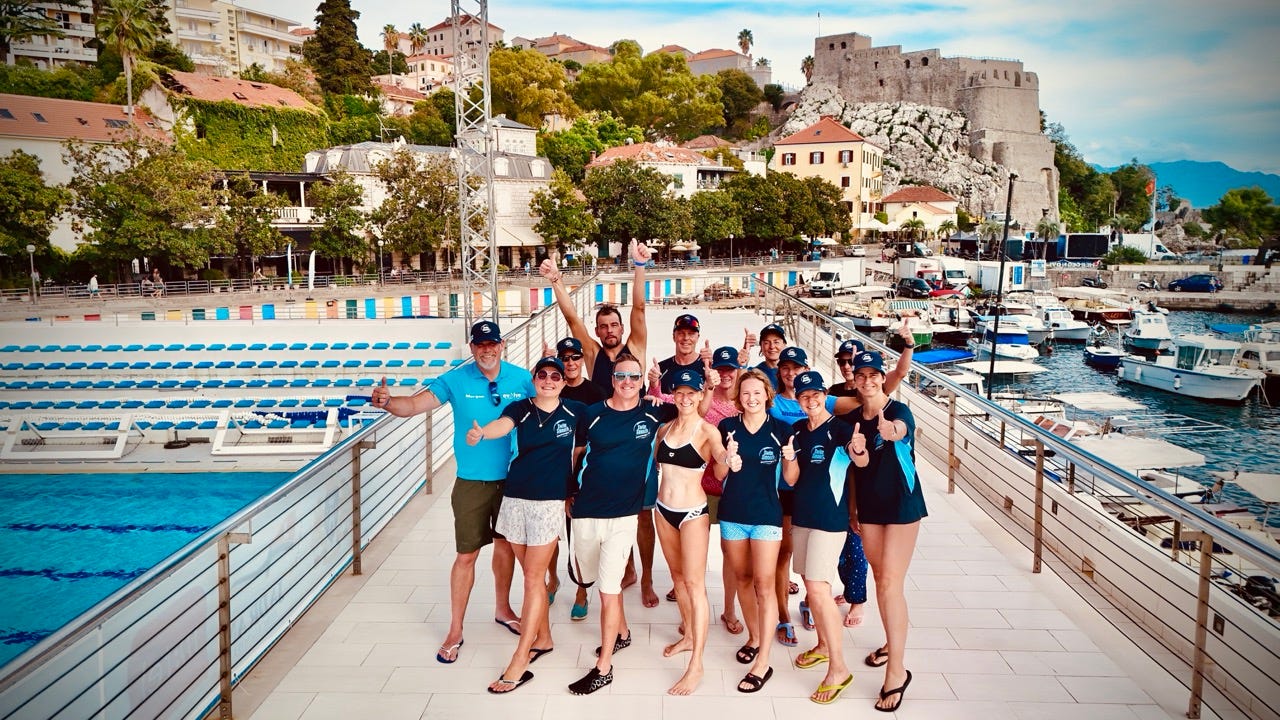
Don't miss out! Applications for our two exciting new Swim Smooth Experiences in Egypt (17–23 January) and Fuerteventura (2–8 March) close this Monday, 30 November. Whether you're looking to kickstart your 2027 season, transform your stroke or simply enjoy a fantastic week of swimming in the sunshine with like-minded people, we'd love you to join us. All abilities are welcome!