

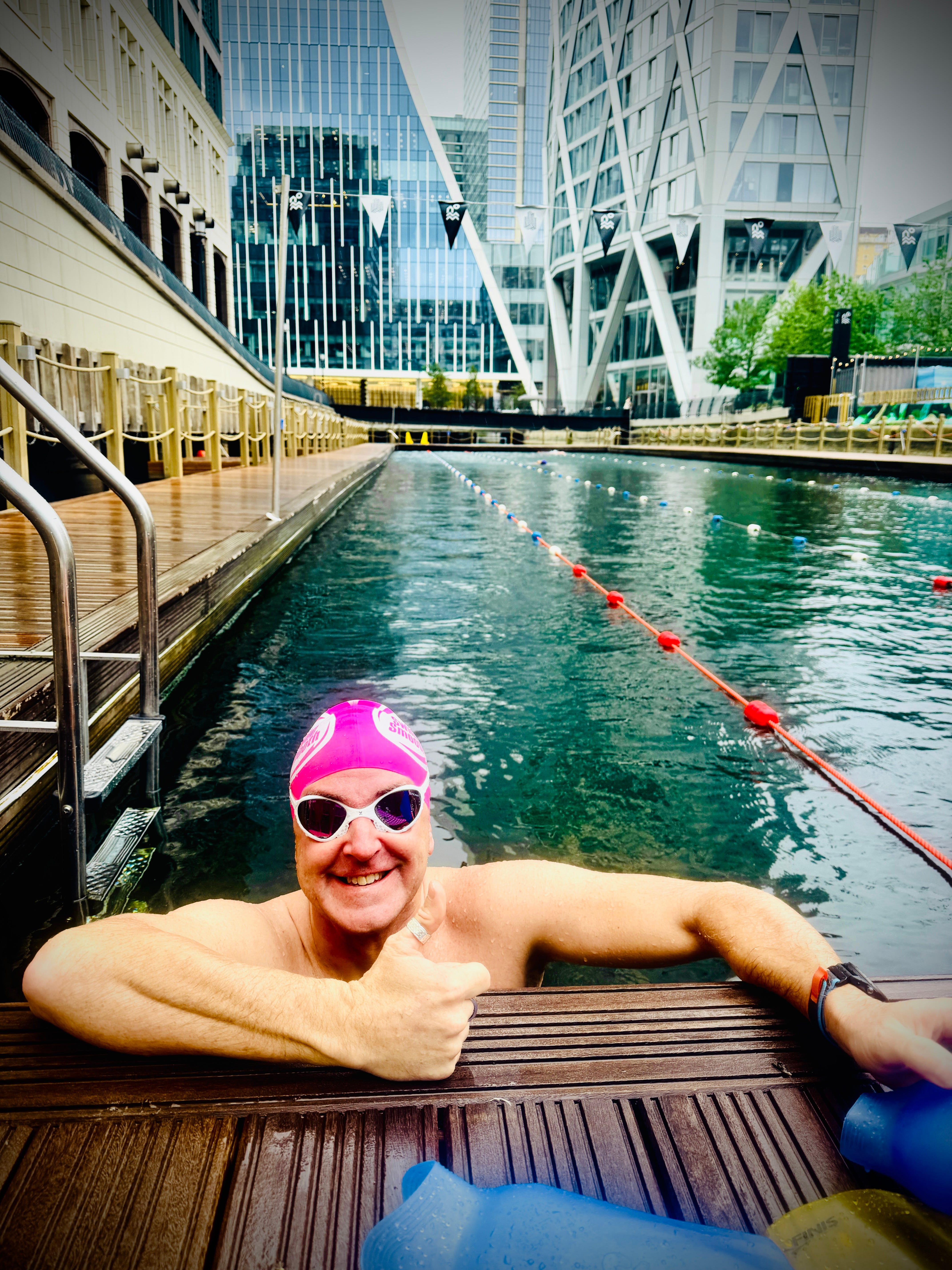
Hey Swimmers
Firstly, a huge thank you to everyone who showed such incredible interest in our Swim Smooth Clinic at the University of Bath this Saturday.
The clinic sold out in a record 2 hours and 34 minutes, which genuinely blew me away. I’m now over from Australia and particularly excited to be returning to Bath University, where I studied Sport & Exercise Science from 1997–2001. There’s something rather special about coming back 25 years later to coach swimmers and coaches in the very place where so much of this journey began.
But before heading west, yesterday offered a very different swimming experience.
Swimming in the heart of London
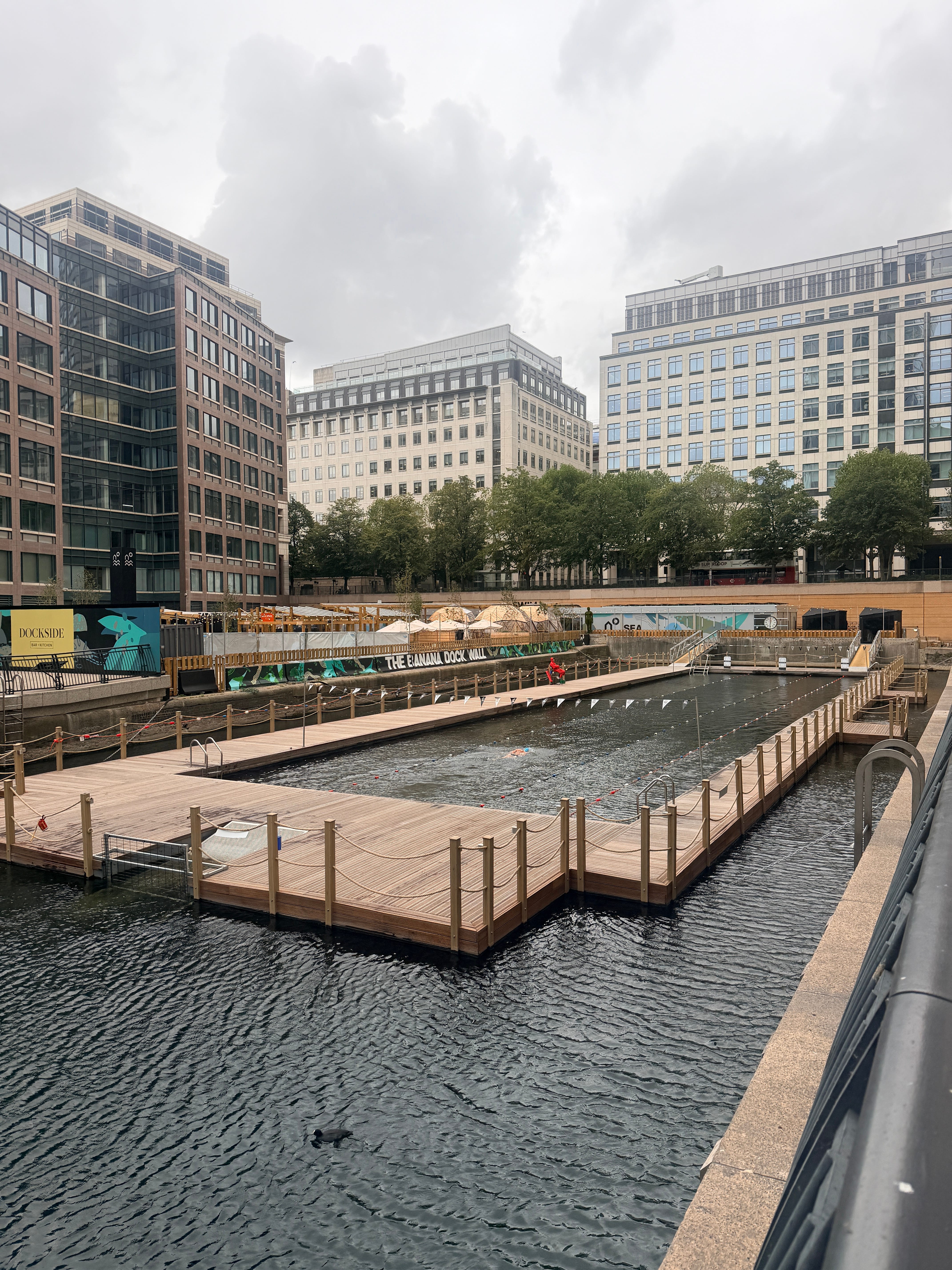
After arriving in London, I headed to Sea Lanes Canary Wharf for a swim in their extraordinary 50m, six-lane natural swimming pool in Eden Dock.
At 18°C, beneath grey skies, a little rain and enough wind to make stripping down to your bathers seem mildly questionable, there was definitely that familiar moment of hesitation before getting in. With colder water, you’re never quite sure how the body is going to respond until you actually take the plunge.
Once in, though? Absolutely beautiful.
The water was remarkably clean and clear. Eden Dock is isolated from the Thames and surrounding Docklands and is fed by groundwater naturally filtered through layers of chalk, sand, clay and gravel. There’s no chlorine, and the water quality is regularly tested. The reeds, vegetation and occasional bit of moss around the edges initially feel slightly strange to anyone accustomed to conventional pools, but that’s precisely the point: this is a natural swimming environment right in the middle of one of the world’s great cities.
Sea Lanes is open year-round and has been deliberately designed as a stepping stone between conventional pool swimming and open water. I absolutely love that concept.
Getting comfortable with colder water
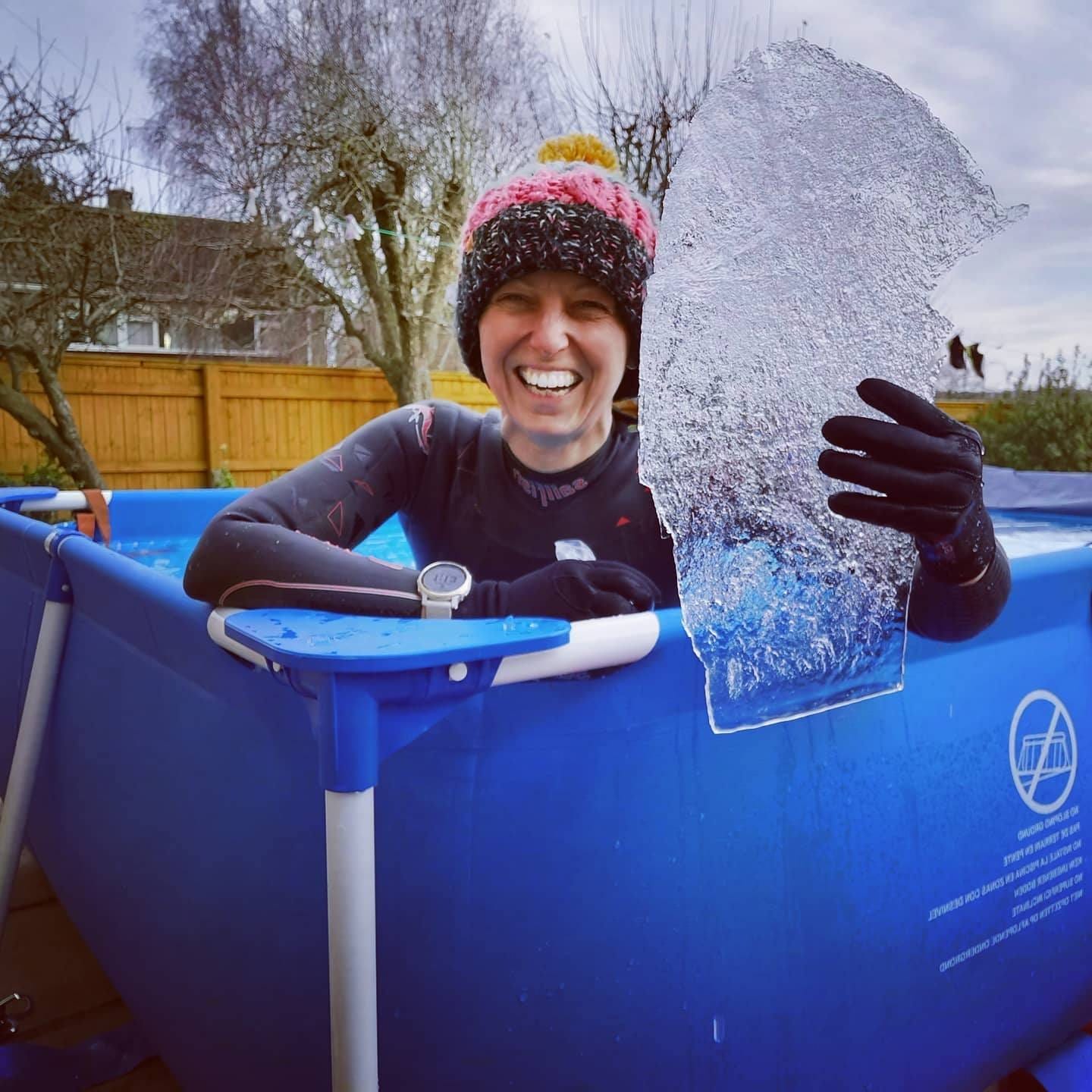
And now is actually a brilliant time to start.
As autumn arrives across the UK and Northern Europe, water temperatures will gradually fall. Rather than suddenly deciding in January that you’re going to become a cold-water swimmer, allow the seasons to acclimatise you naturally.
Keep swimming regularly as temperatures decline. Initially, don’t worry about staying in for ages; consistency is more important than bravado. Enter calmly, allow your breathing to settle and consider a wetsuit or additional thermal protection as temperatures fall.
Most importantly, respect what your body is telling you and make warming up properly afterwards part of the session. Cold-water swimming isn’t a competition to see who can tolerate the lowest temperature. It’s about progressively developing confidence and familiarity with the environment.
While we’re here… what exactly is a 2-beat kick?
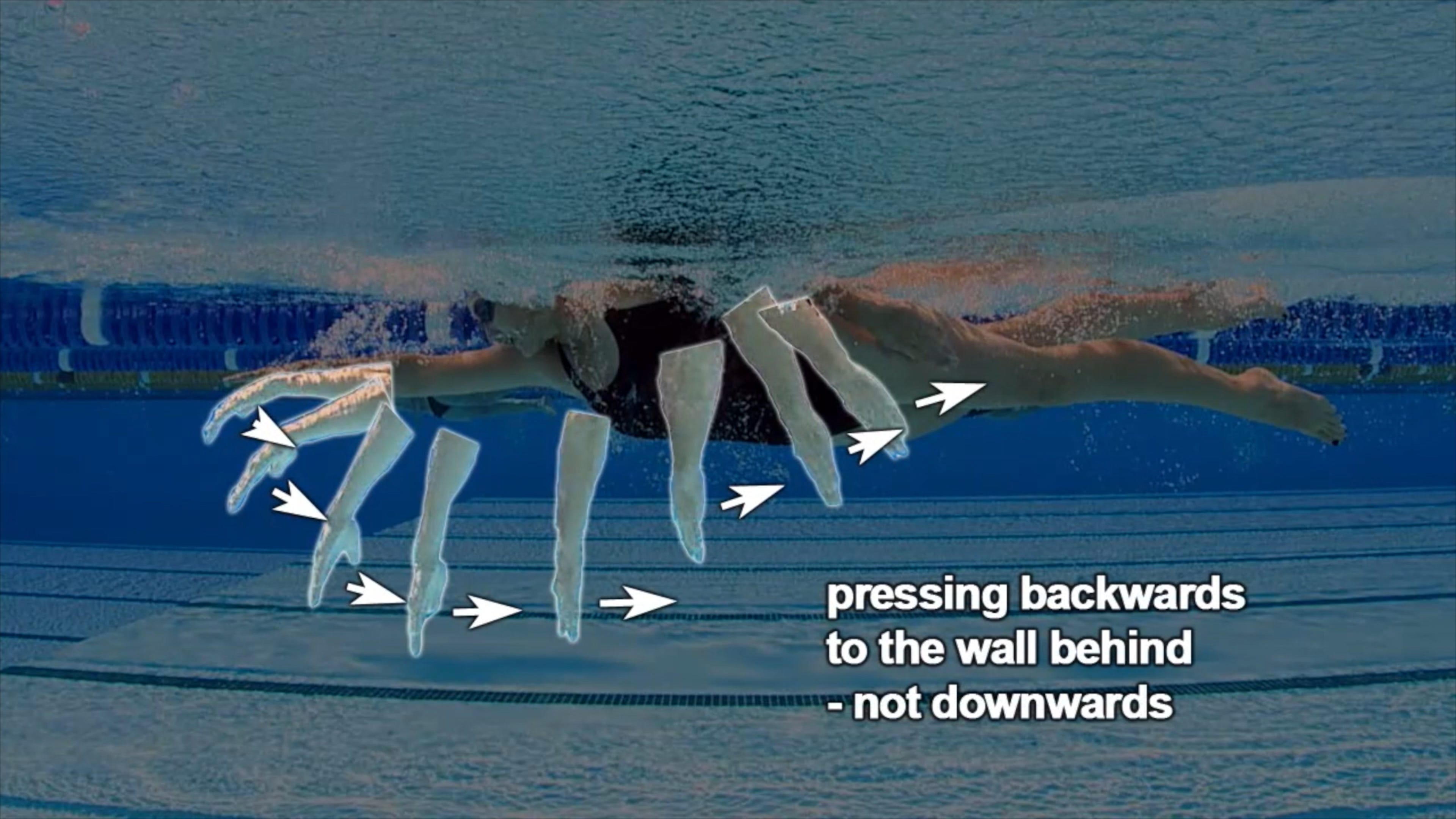
Sea Lanes also gave me the perfect backdrop to film something I’m asked about all the time: the 2-beat leg kick versus the conventional 6-beat flutter kick for distance freestyle.
I grew up swimming with a 6-beat kick, as most swimmers do, but switched to a 2-beat kick around 15 years ago. For me, it has ultimately allowed me to swim faster over longer distances while using considerably less energy. But here’s the important bit: a 2-beat kick might involve less kicking, but technically it’s actually harder to get right.
So what exactly are we looking for?
With a 2-beat kick, there is one downward kick for each arm stroke, connecting opposite sides of the body:
Right hand enters, left foot kicks down.
Left hand enters, right foot kicks down.
Another way of feeling the same timing is to think of the right foot kicking as the right arm pulls through, and vice versa on the left.
If that sounds a little like rubbing your belly while tapping your head, you’re not alone!
A simple way to start finding the rhythm is to breathe every four strokes to one side. If you’re breathing to your left, concentrate on feeling your left foot kick down precisely as your right hand enters and begins establishing the catch. Don’t initially worry about swimming fast — concentrate on feeling that cross-body connection.
Develop a 2-beat kick: The Criss Cross Drill
One of my favourite ways of exaggerating this sensation is our Criss Cross Drill. Put a paddle on one hand and a fin on the opposite foot — for example, a paddle on your right hand and a fin on your left foot. Making those two opposite extremities feel much larger makes it considerably easier to feel that contralateral connection: right hand entering and catching as the left foot kicks down. Then swap sides.
One important caveat: the 2-beat kick isn’t necessarily for everyone. You need a good catch and pull-through to make it work effectively. If you currently generate a lot of propulsion from your legs and simply switch them off in an attempt to adopt a 2-beat kick, you may feel as though someone has pulled the handbrake on!
The goal isn’t simply to kick less. It’s to connect the kick beautifully with the rotation, catch and pull of the stroke — creating rhythm, timing and propulsion through the whole body.
Take a look at the Instagram video below and watch closely for that opposite hand-to-foot connection:
Building the next generation of Swim Smooth Coaches
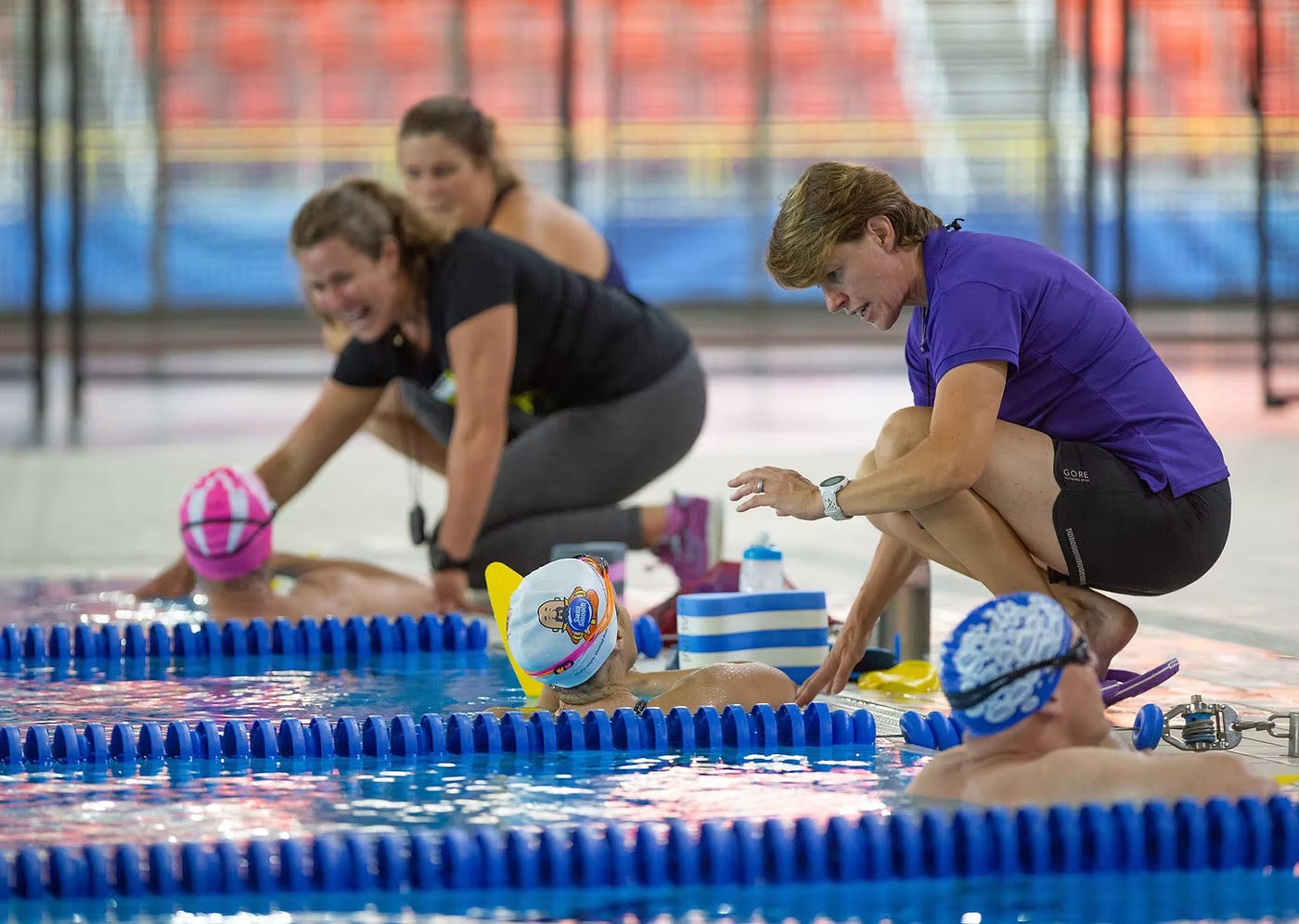
Today switches the focus from my own swimming to coaching.
I’ll be meeting our Swim Smooth Certified Coaches online to introduce them properly to SwimCoachHQ, something I’ve spent the last nine months creating to bring coach education, certification and ongoing development together with the practical tools required to build a successful coaching business.
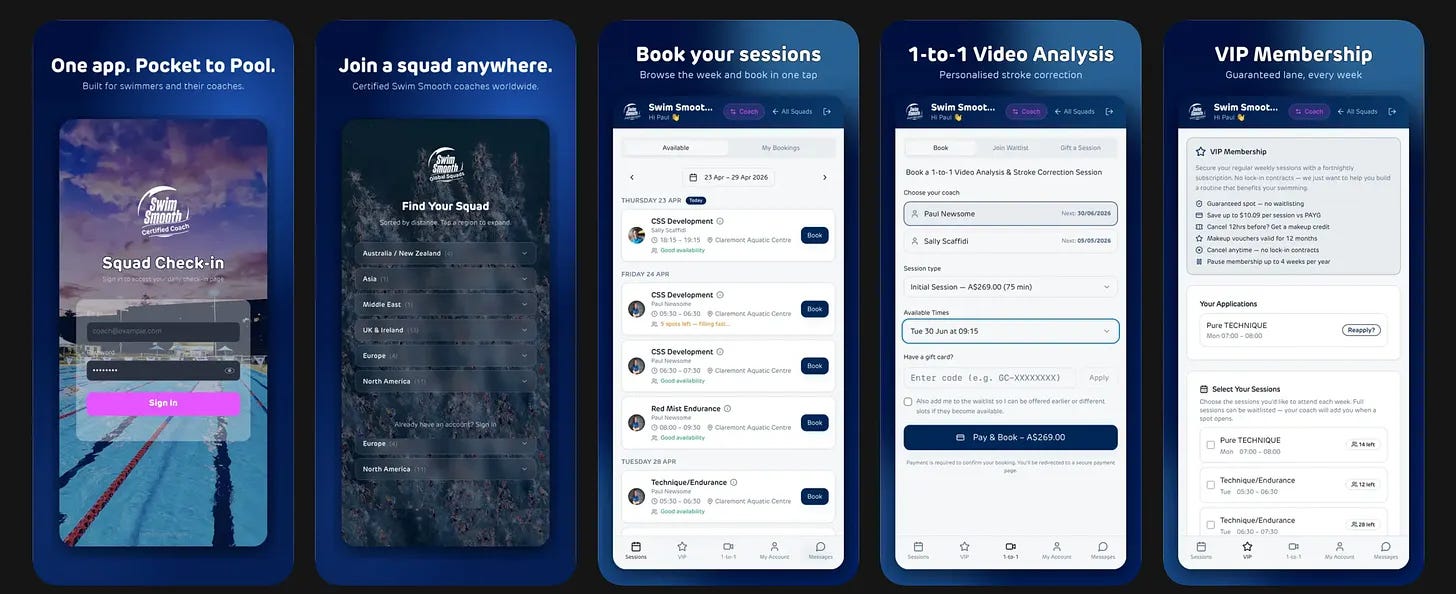
That includes a brand-new booking and payment system, swimmer communication and CRM tools, video analysis, ongoing coach education and even bespoke website generation to help each coach maximise the visibility of their services within their own local community.
The idea is actually very simple:
Better coaches, supported by better systems, creating better swimming communities.
I’m particularly pleased that some of our coaches will be joining us at Bath University on Saturday. From there, we’ll see many more of the Swim Smooth family in Greece next week for the UltraSwim 33.3 on Skopelos Island, before heading across to Crete for our week-long Swim Smooth Experience.
It should be a fantastic couple of weeks.
And if you’re a coach reading this thinking, I’d love to be part of that, now is a very good time to put your hand up.
We’ll shortly be accepting applications for our next intake of Swim Smooth Certified Coaches for 2026/27.
If you share our passion for coaching the swimmer rather than simply coaching “the stroke”; for creating nurturing, inclusive swimming communities; and for helping swimmers develop technique, fitness and confidence in an environment they genuinely enjoy being part of, we’d love to hear from you.
From 18°C natural swimming in the middle of London, to returning to Bath after 25 years, to bringing our coaches together from around the world — it feels like a rather nice way to start this European trip.
Thanks for reading, your coach, Paul
