

Hey Swimmers,
One of the biggest mistakes adult swimmers make is trying too hard to look like a swimmer.
That might sound strange coming from a coach, but hear me out.
Over the last 20 years of analysing swimmers all around the world, I’ve seen countless athletes trying to force textbook positions into their stroke. High elbows. Fingertip drag. Over-gliding. Excessively long strokes. Perfect symmetry.
And ironically, the harder they try to look smooth, the more tension and inefficiency they often create.
At Swim Smooth, we’ve always believed in coaching the swimmer, not the stroke.
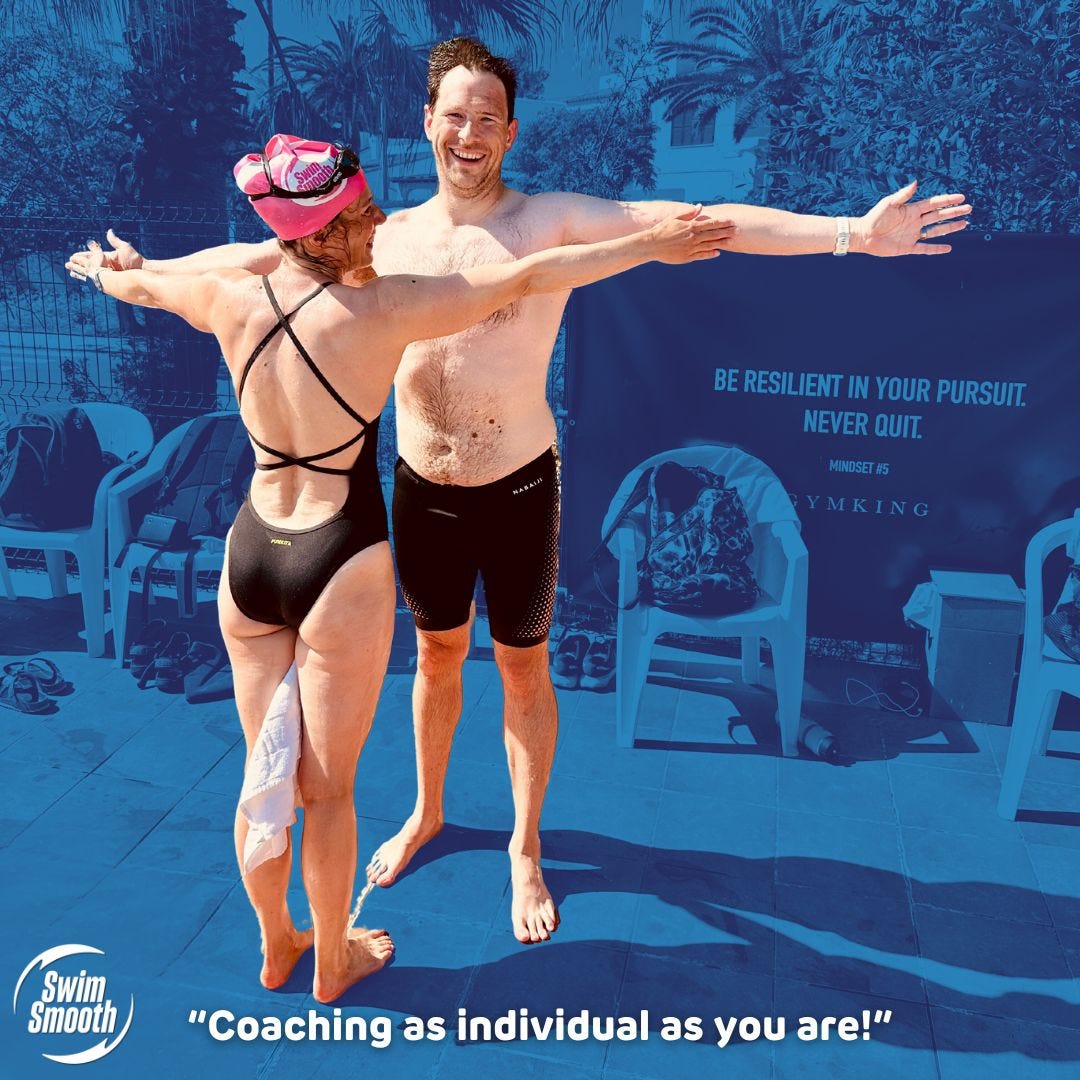
There is no single perfect freestyle technique.
If there was, every elite swimmer would look identical.
Instead, what we actually see is tremendous variety. Some swimmers have straighter arm recoveries. Others swing wider. Some naturally swim with higher stroke rates. Others look more patient and controlled. Both can be incredibly effective.
The real goal isn’t perfection.
It’s efficiency.
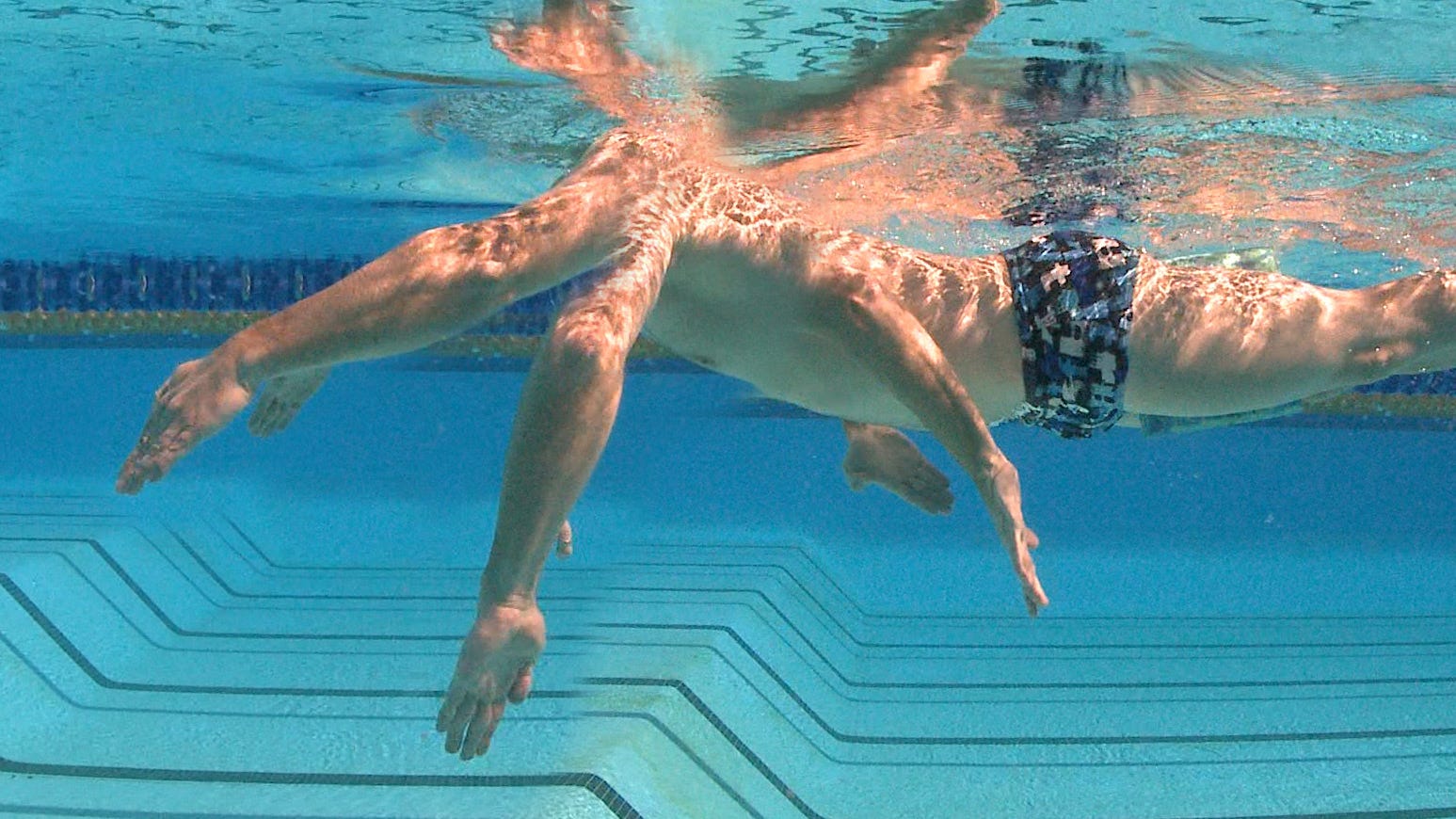
Take crossover for example. This is still one of the most common issues we see during video analysis sessions. The swimmer reaches across the centreline during hand entry and extension, causing the body to snake through the water. Often this creates scissor kicking, instability and shoulder discomfort.
Most swimmers try fixing this by consciously forcing their hands wider.
Usually that doesn’t work.
What often works far better is improving posture.
“Shoulders back. Chest forwards.”
That subtle adjustment naturally creates more space through the front of the stroke and allows the arms to recover and enter more cleanly without forced manipulation. Watch this video to see how:
The same applies to breathing.
Many swimmers are still holding their breath underwater and then explosively exhaling right before breathing in. This creates tension through the neck and shoulders and often leaves swimmers feeling permanently rushed.
A gentle continuous exhalation changes everything.
Suddenly the stroke feels calmer. More rhythmic. More sustainable. Watch this video to see how:
I often remind swimmers that good technique should feel freeing, not restrictive.
If you constantly feel like you’re “trying” to hold positions together, something probably isn’t right.
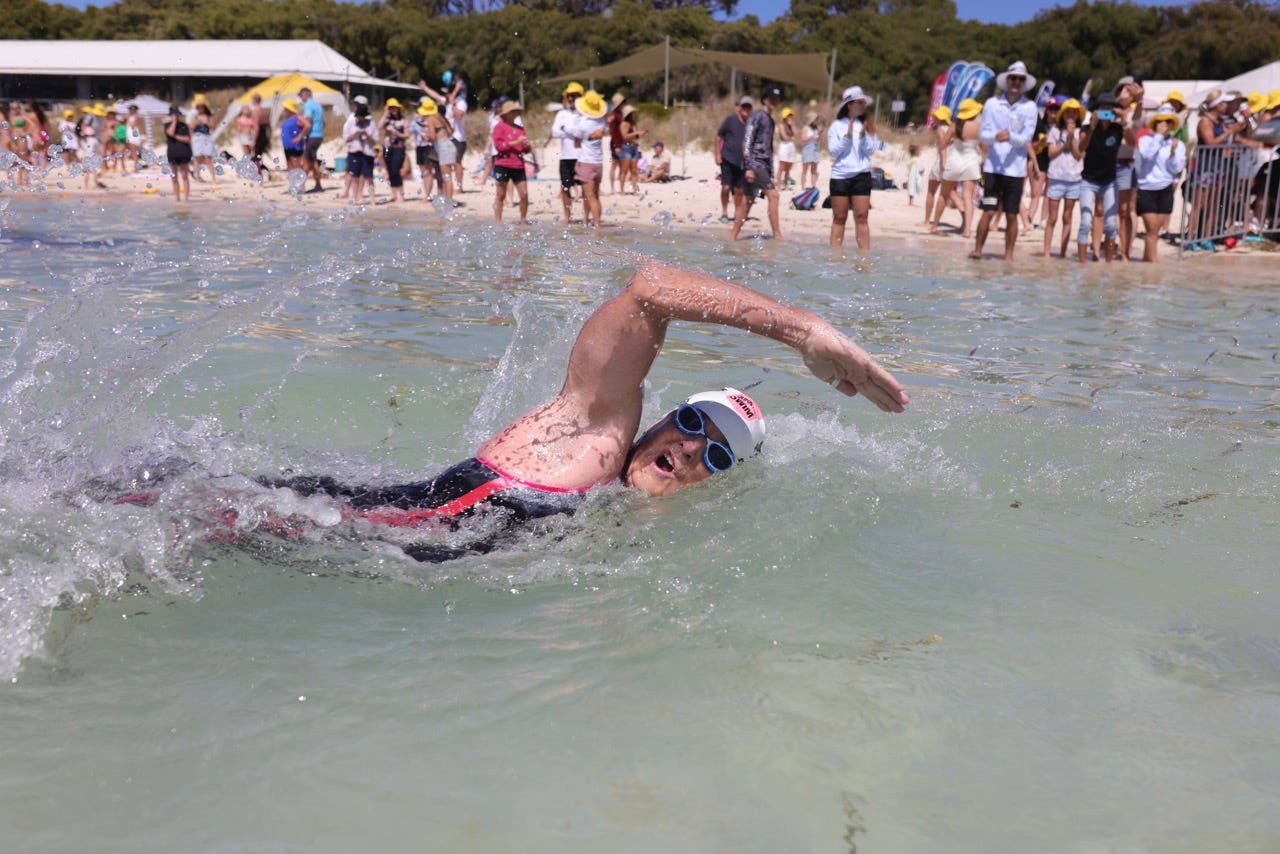
Some of the fastest open water swimmers in the world actually look quite unconventional by pool swimming standards. Shelley Taylor-Smith’s beautifully timed two-beat kick. Janet Evans’ high stroke rate. Even modern elite open water swimmers often favour practicality and rhythm over aesthetics.
Efficiency wins.
Always.
So next time you swim, stop obsessing over trying to look perfect.
Instead ask yourself:
Does this feel sustainable?
Does it feel relaxed?
Does it help me move forwards more easily?
That mindset shift alone often unlocks more progress than another six months of forcing positions your body simply doesn’t suit.
Thanks for reading, your coach, Paul.
