

Hey Swimmers
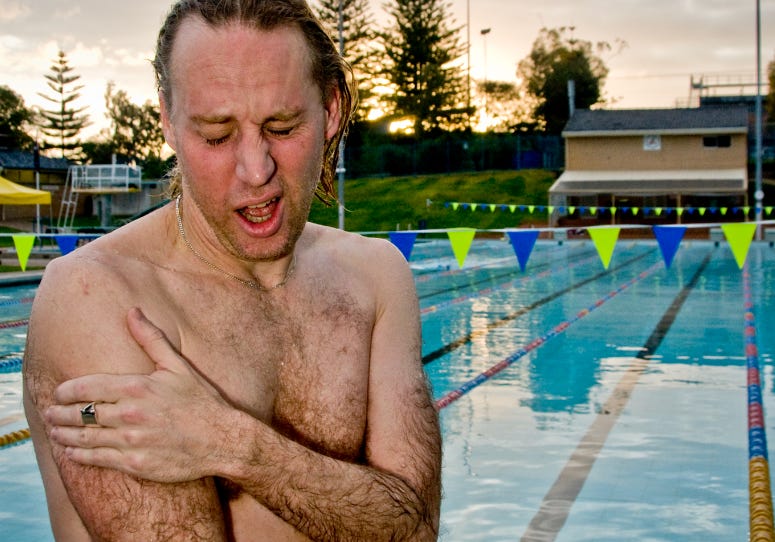
Around 80 percent of swimmers will experience enough shoulder pain at some point to miss a few days in the water. Could this be you? Frustrating, isn’t it?
For years we were told that was normal. “Swimmer’s shoulder.” Just part of the deal.
It isn’t.
In almost every case, shoulder pain is your stroke tapping you on the shoulder and saying, “Something’s off.”
Here are the four classic culprits I still see week in, week out.
1. Thumb-First Entry.
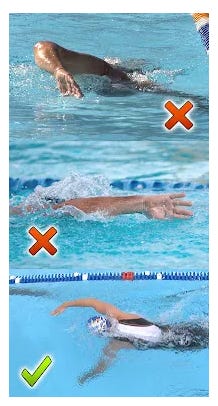
If your thumb is slicing in first with the palm turned outwards, you are internally rotating the shoulder and loading the joint heavily.
It might look smooth.
It isn’t shoulder-friendly.
Fingertips first. Palm facing down. Keep the shoulder neutral and set yourself up for a clean catch.
2. Stroke Crossover.
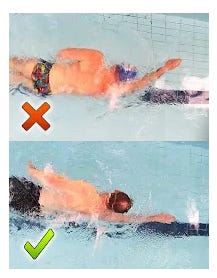
If your hand crosses the centre line in front of your head, you are stressing the joint.
Pain is often felt at the front of the shoulder as impingement, or as a stretched, numb feeling at the back.
Your middle finger should extend forward in line with the same shoulder. Not across your body.
Combine crossover with a thumb-first entry and you have the perfect recipe for trouble.
3. Pushing Down At The Catch.
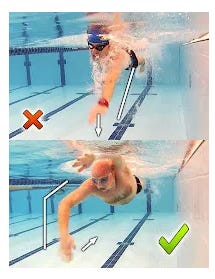
This is the classic “I feel loads of pressure on the water so it must be good” mistake.
You reach long and then push down hard with a straight arm.
It feels powerful.
It lifts your front end, drops your legs and places huge stress on the shoulder.
Press back. Not down. It should feel controlled, not forced.
4. Straight-Arm Pull Through.
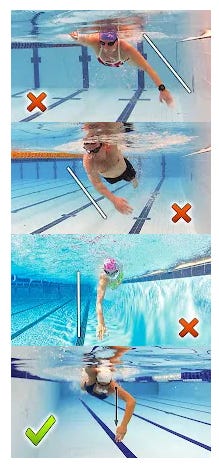
Pulling wide. Pulling straight. Crossing under the body.
All increase shoulder load.
Bend the elbow under the body. Bring the hand directly beneath the shoulder. “Bending It Like Becky” is not just catchy, it protects you.
A Lesson From The English Channel.
In 2011, during my English Channel swim, we were battling a brutal cross headwind from the south west, gusting up to 30 knots.
The boat decided to shelter me by sitting on my right shoulder so I could swim in the lee.
Sounds sensible.
Except it meant I was breathing mostly to my right to keep an eye on the crew.
Three hours in, my left shoulder was flaring badly.
Why?
My rotation to the left had flattened off. I was likely crossing over slightly with the left arm as I breathed right. Subtle. But thousands of repetitions in rough water add up quickly.
I told the crew I wanted to swim on the other side of the boat.
They thought I was mad. It was chaotic over there.
I switched anyway.
It was rough. Horrible.
But I was forced to breathe left. My rotation evened up. The crossover disappeared.
The shoulder pain vanished almost immediately.
That decision helped get me to France in 12 hours 14 minutes. Fastest time that day on what was awarded by the Channel Swimming Association as the worst conditions of the entire 2011 season.
Small technical tweaks. Big consequences.
Monitoring Shoulder Stress in 2026.
Today, we don’t have to rely purely on feel.
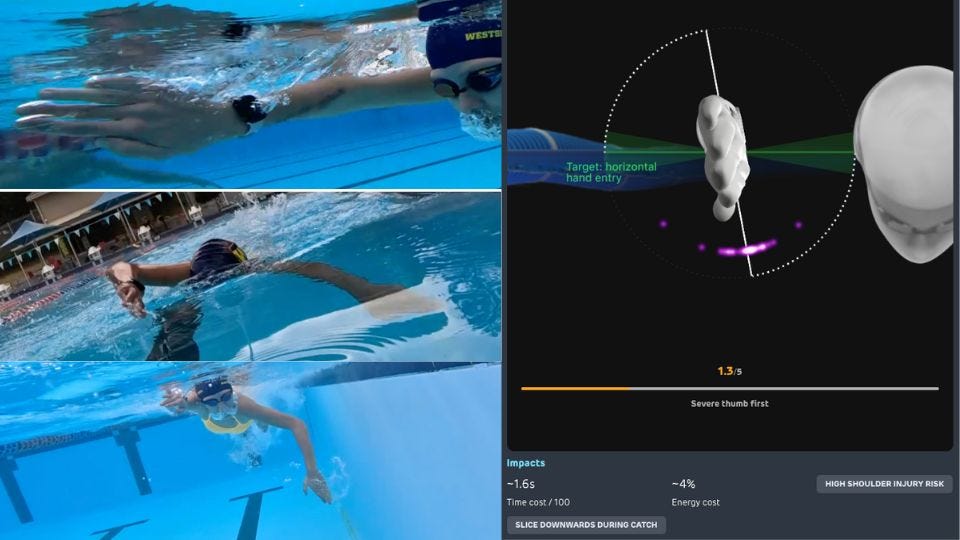
With these specific 3 of 6 patented Stroke Insights on Apple or Garmin, you can track the very metrics that influence shoulder load:
1. Hand Entry Angle.
Flags thumb-first tendencies and excessive internal rotation.
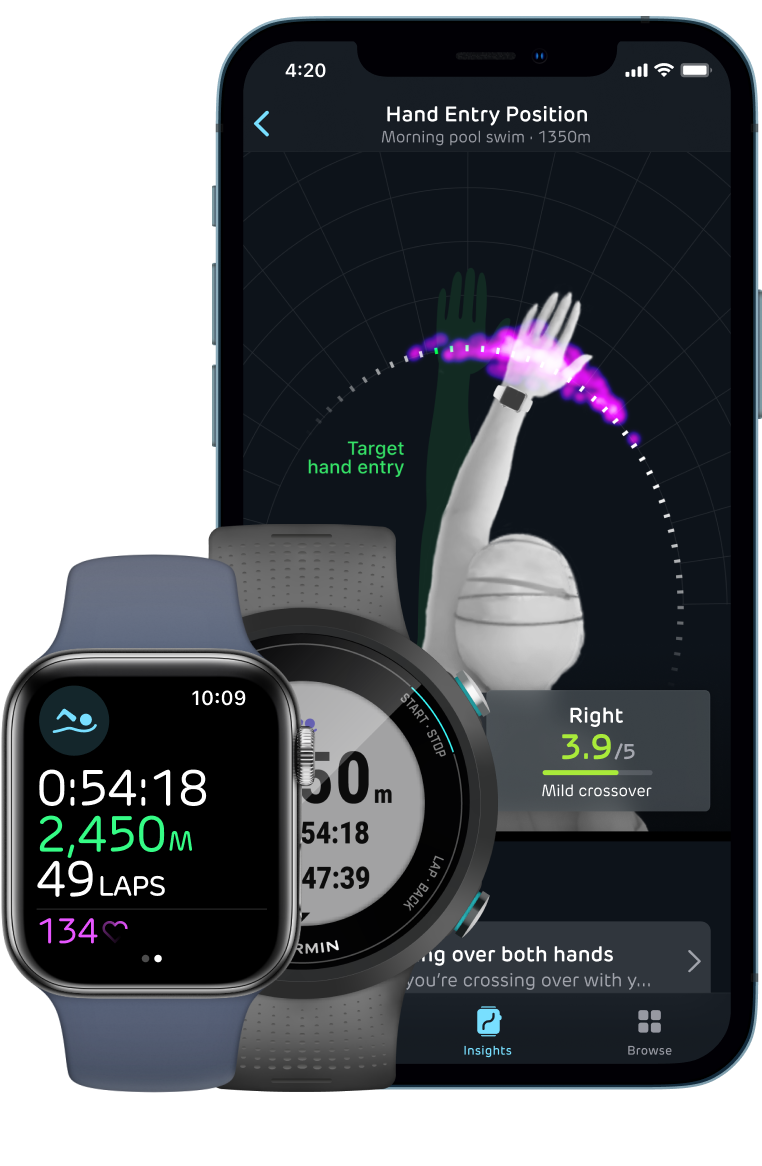
2. Hand Entry Position.
Reveals crossover or overly wide entry.
3. Pull-Through Path
Highlights straight-arm pulls or crossing under the body.
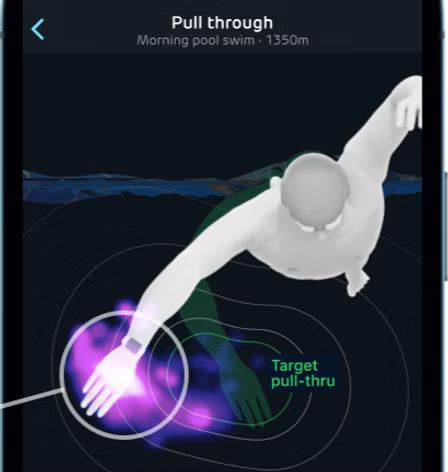
If those numbers drift during a long swim like Rottnest, that is your early warning system.
Managing Shoulder Fatigue On The Fly (Rottnest Channel Swim Edition for next weekend)
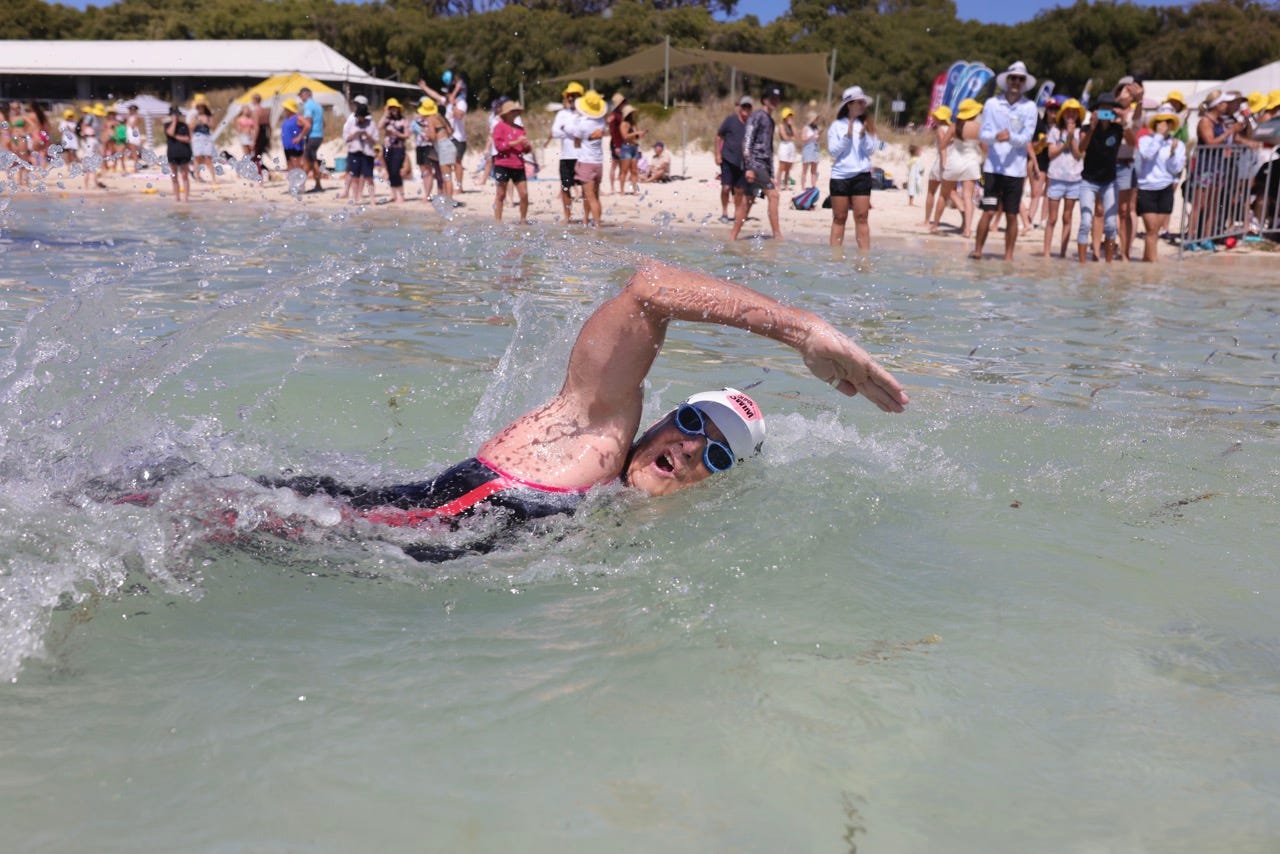
Good luck all competitors for this iconic event with some 3,000 participants taking on 20km from Cottesloe Beach to Thomson’s Bay).
In long swims like Rottnest, some shoulder fatigue is common. The savvy swimmer prepares solutions.
If soreness starts:
Check entry immediately. Ensure fingertips first. No crossover.
Breathe more often to the sore side for 15–20 minutes. This encourages better rotation and reduces pressure on that shoulder.
Let your paddler navigate. Excessive sighting, especially in rough water, adds repetitive lift stress to the shoulders.
Shorten the stroke slightly and lift stroke rate a touch. Avoid over-gliding and leaving the lead arm extended too long.
Relax the recovery. Slightly straighter, looser recovery can reduce strain.
In extreme cases, easing the load by slightly opening the fingers during the pull can reduce stress, even if it costs a little speed.
Shoulder pain is rarely random. It is feedback. Listen early. Adjust quickly.
Prevention is always better than cure.
Swim Smooth.
Thanks for reading, your coach, Paul.
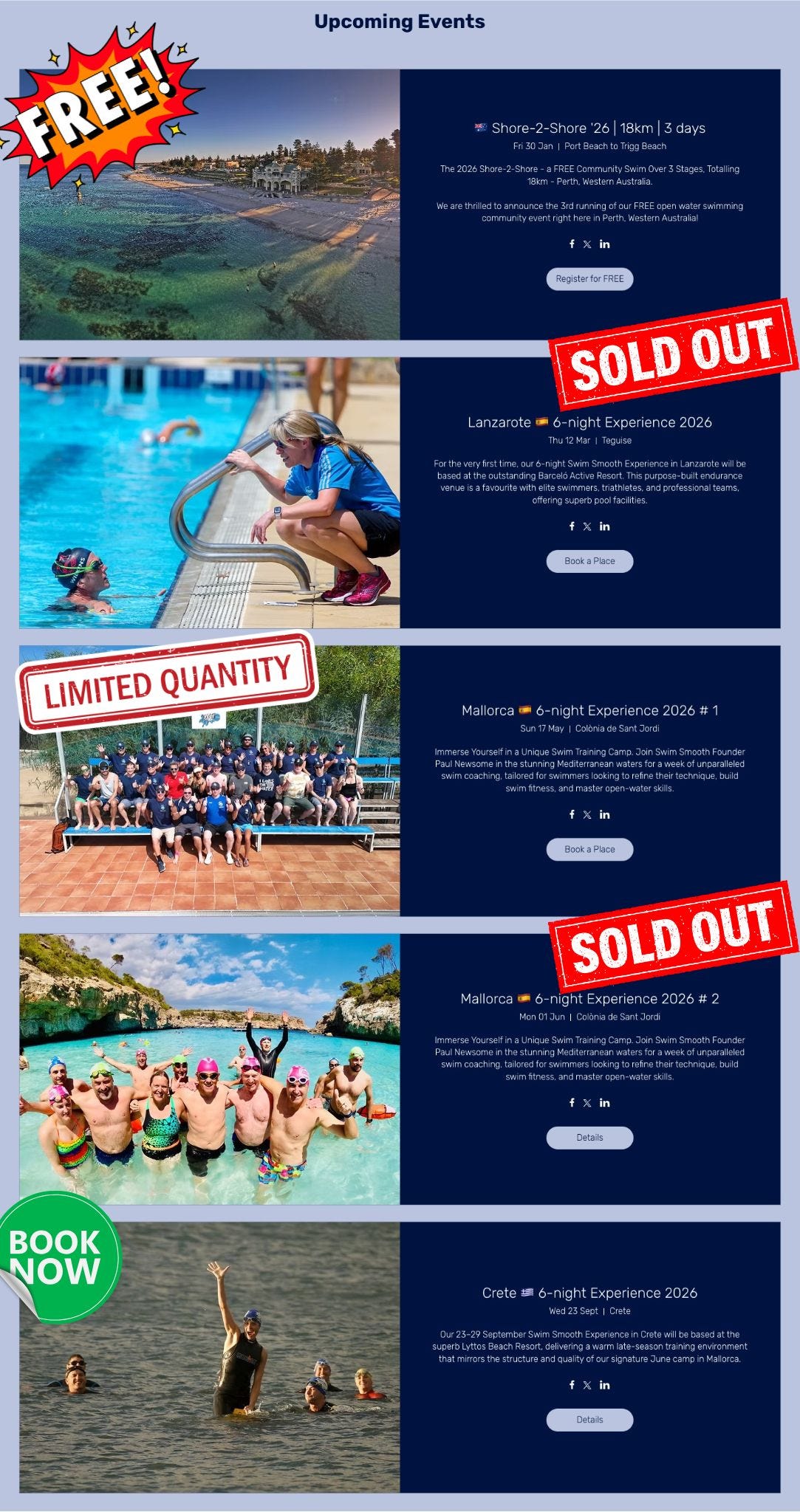
Want to Join Us on a Camp in 2026 to Work on Your Speed & Making You More Injury Robust?
We’re now down to only a few places remaining on our various Swim Smooth Experiences in 2026. For the full run-down of events where I’ll be coaching, head to:
And There’s More!
All of our Swim Smooth Coaches also offer their own experiences, squads, camps and clinics and can be reached here:
Here’s some highlights from our awesome Coaches:
Lanzarote 🇪🇸 with Coach Alison 🇬🇧 15-22 March here
Croatia 🇭🇷 with Coach Marieke 🇧🇪 12-14 May here
Italy 🇮🇹 with Coach Fiona 🇬🇧 27 May to 3 June here
Italy 🇮🇹 with Coach Fiona 🇬🇧 2-9 September here
Canada 🇨🇦 with Coach Mary 🇺🇸 7-11 May here
Greece 🇬🇷 with Coach Lorna 🇬🇧 6-13 September here
Mallorca 🇪🇸 with Coach Tim 🇬🇧 4-8 May here
