

Hey Swimmers
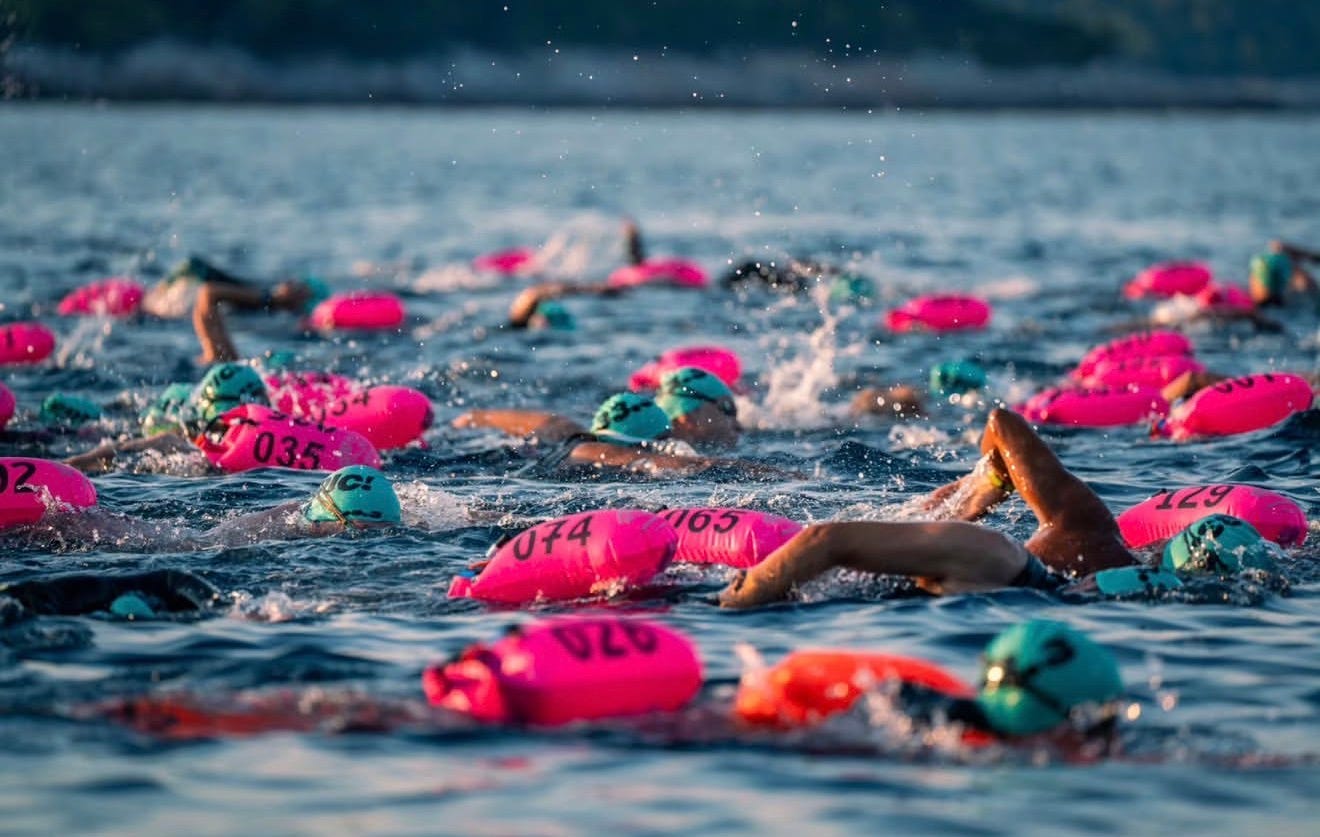
Last weekend, nearly 200 swimmers gathered on the beautiful Greek island of Skopelos for UltraSwim 33.3 - four days of open water swimming totalling, appropriately, 33.3km: approximately the straight-line distance between England and France across the English Channel.
Coming just a year after the 150th anniversary of Captain Matthew Webb’s pioneering Channel swim, it felt like a wonderful celebration of how far our sport has come.
Rather than tackling 33.3km continuously, UltraSwim breaks the challenge into stages:
Day 1 gave us two swims - 4km followed by 4.9km after breakfast.
Day 2 was 8.5km to the famous Mamma Mia church.
Day 3 was the 10km “Queen Stage”
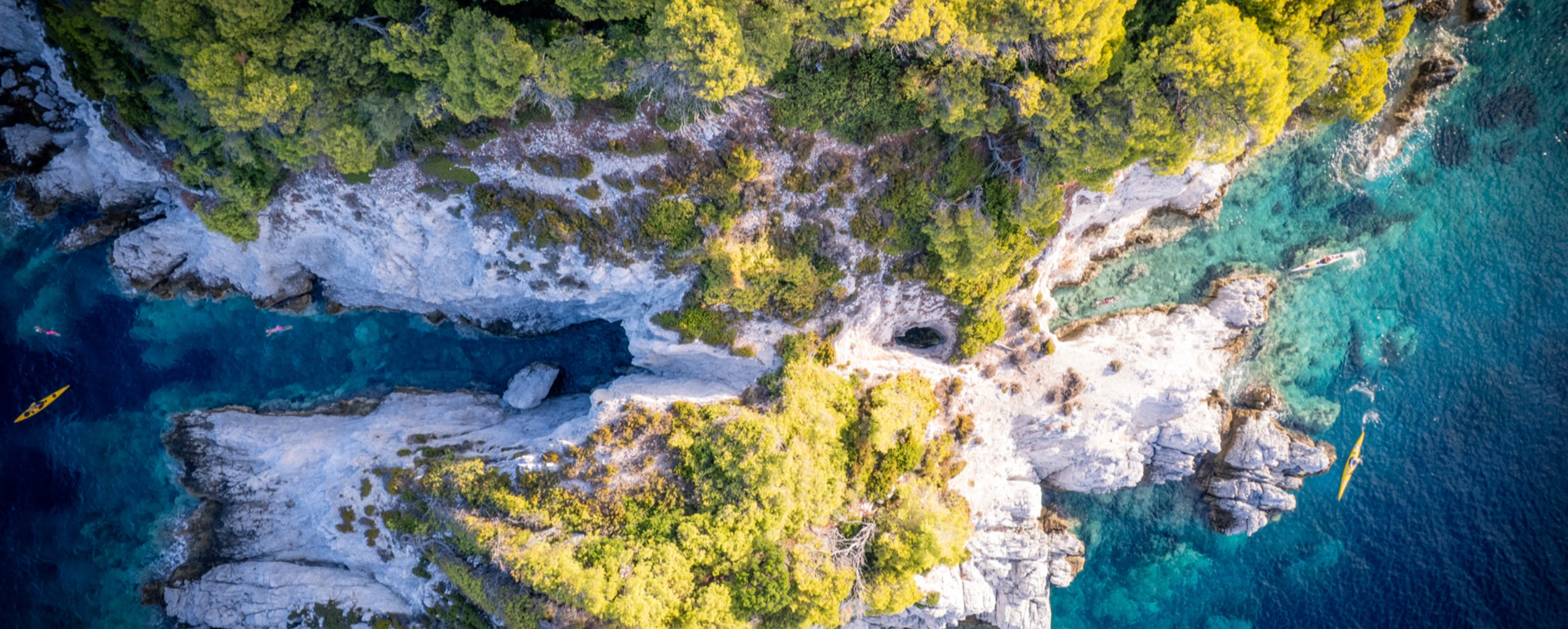
Day 4 took us 4.9km around a small offshore island, including an extraordinary swim through a narrow sea cave.
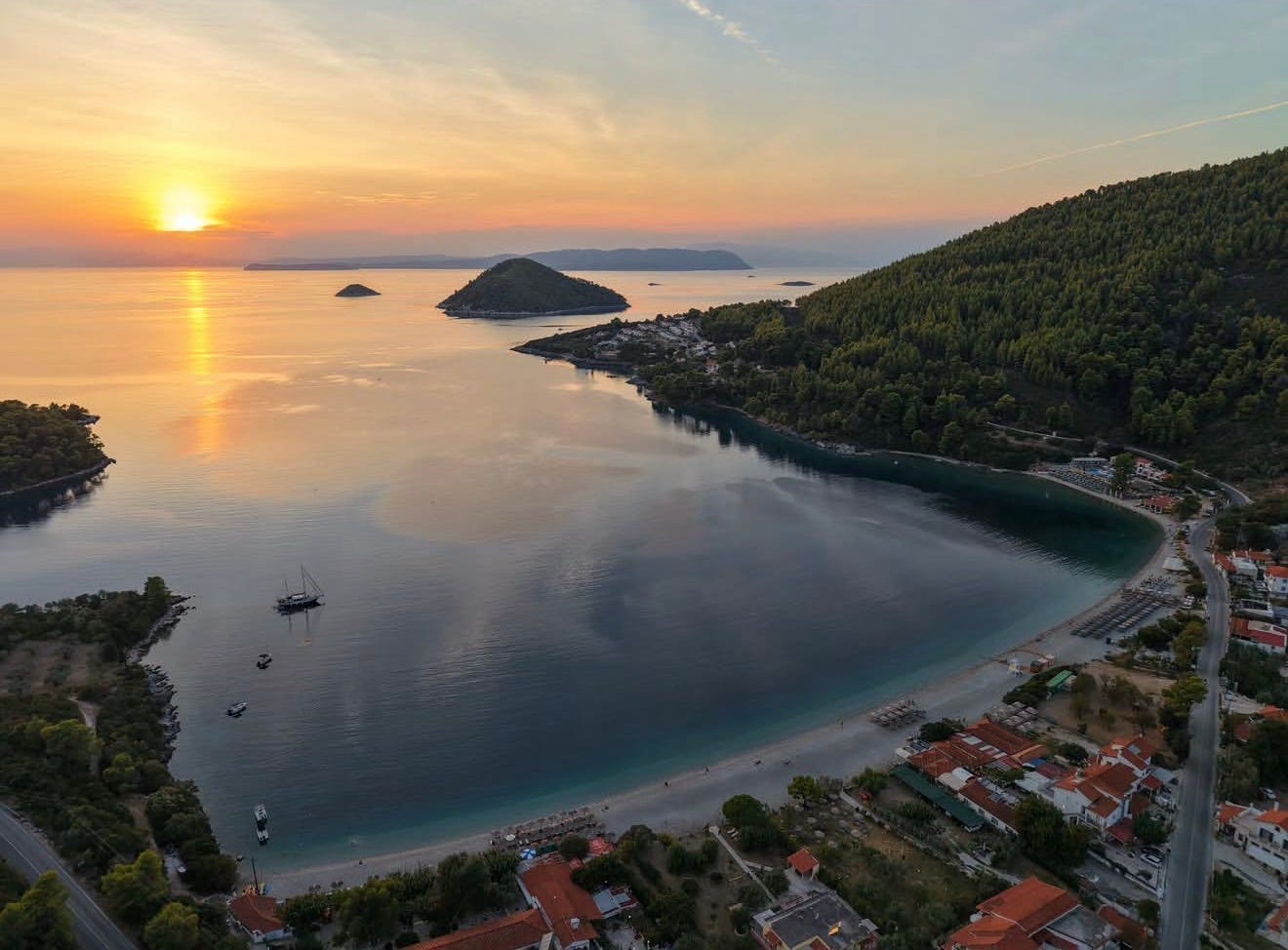
Conditions were almost idyllic throughout. Crystal-clear water, spectacular rocky coastlines and mostly calm seas - although Greece had one rather significant trick waiting for us: current.
Finding Out Who Was Who
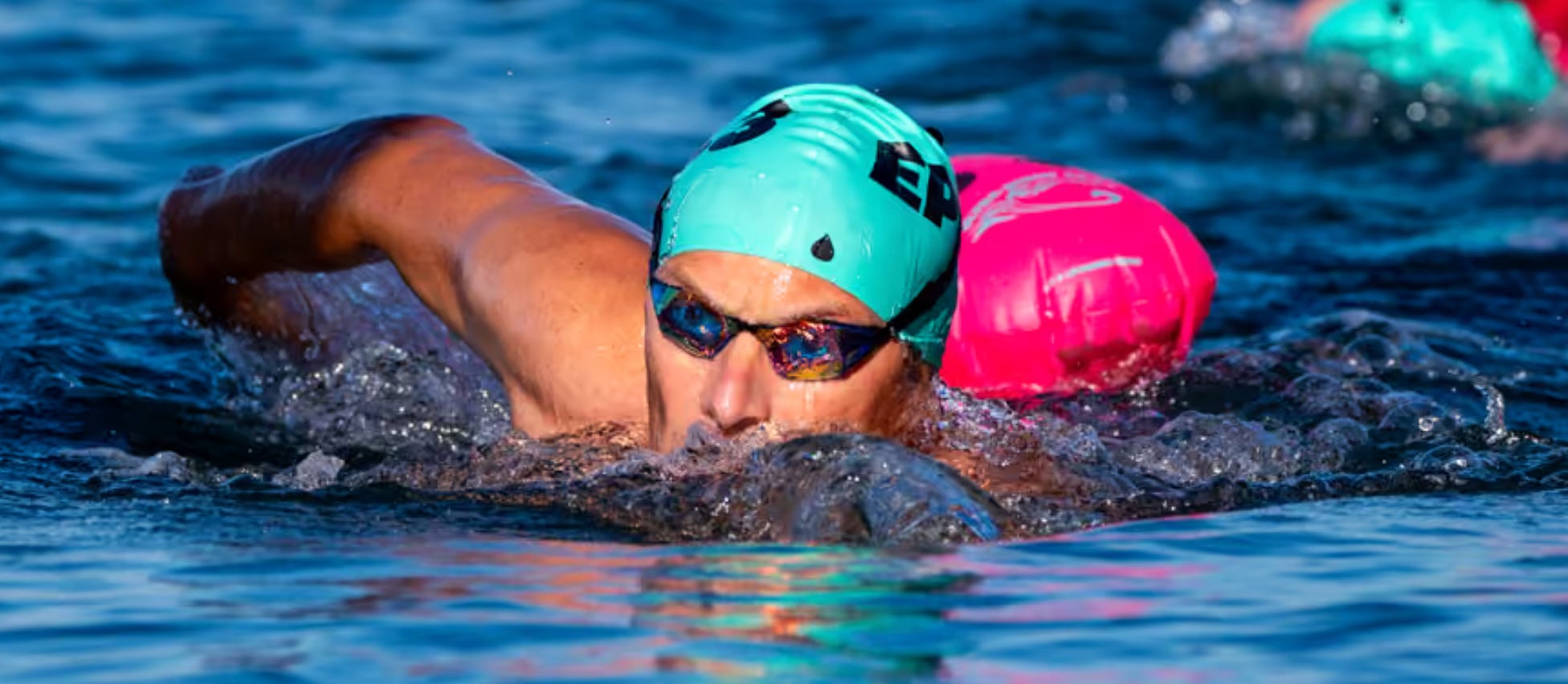
I’d prepared diligently and arrived feeling in good shape, but Day 1 always brings uncertainty. Who is here? How fast are they? And, perhaps most importantly, have I prepared well enough?
Within a few hundred metres, one answer became abundantly clear.
Former Brazilian professional marathon swimmer Samir Barel was in a completely different league.
Behind him, though, things were getting interesting.
I found myself battling with Chris Cole, a former collegiate 400IM swimmer from Los Angeles. Chris and his wife Bryn Handley - herself a former US Trials swimmer - can both swim sub-17 minutes for 1500m (way faster than I’ve ever swum). Along with another Brazilian swimmer, Andre Leao, we quickly formed a competitive little group.
Chris outsprinted me at the end of our opening 4km stage, while Samir was already more than a minute ahead.
Two hours later we went again.
Chris and I had agreed to rotate the lead every 500m, but I completely misjudged a chicane of marker buoys. A couple of unfortunate zigzags later and all the ground we’d worked so hard to gain disappeared. Suddenly Bryn and Andre were back alongside us.
With only around 6km of 33.3 completed, chasing aggressively would have been foolish. I settled into the group, conserved energy and managed to sprint into second at the finish.
Samir? Another three minutes up the road.
When the Current Hit
Day 2 was spectacular: 8.5km along Skopelos’ northern coastline towards the Mamma Mia church.
This time the coastline was on our right, making bilateral breathing particularly valuable. Chris and I managed to hang onto Samir until the first feed station at around 3.2km.
Then he simply disappeared.
Chris and I worked together until the 6.5km feed, where he mentioned some elbow discomfort. After a quick chat and a few suggestions on how he might tweak his stroke to help his elbow, we set off again - straight into an extraordinary 2km/h opposing current.
Progress became painfully slow. Some swimmers effectively became stationary and eventually had to be removed from the water.
I kept concentrating on rhythm and forward momentum and eventually finished around 4½ minutes behind Samir and 1½ minutes ahead of Chris.
The Queen Stage
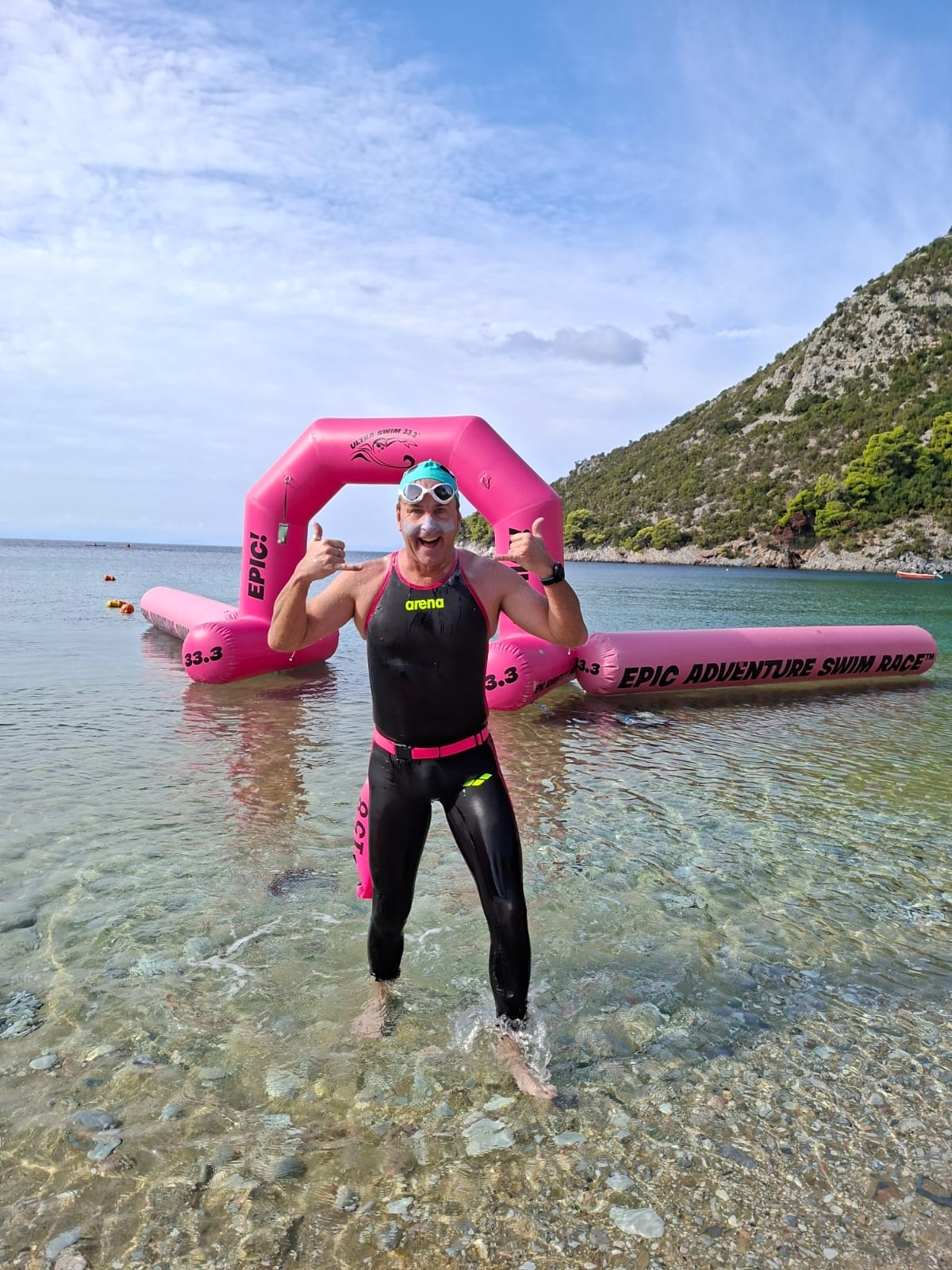
Day 3 was the one I’d earmarked: 10km along the rocky coastline.
I wanted to swim positively, and from the start I felt smooth, rhythmical and controlled. Samir again disappeared ahead, but I gradually established a gap over the chasing group.
When another opposing current appeared around a headland, I focused on something wonderfully simple: stroke rhythm and my two-beat kick. Hands, arms and legs working together. Don’t fight the water. Keep moving forwards.
Interestingly, my data afterwards showed something else. My pace remained relatively stable while my heart rate gradually dropped - a form of heart-rate decoupling suggesting I’d probably under-fuelled and was running low on glycogen.
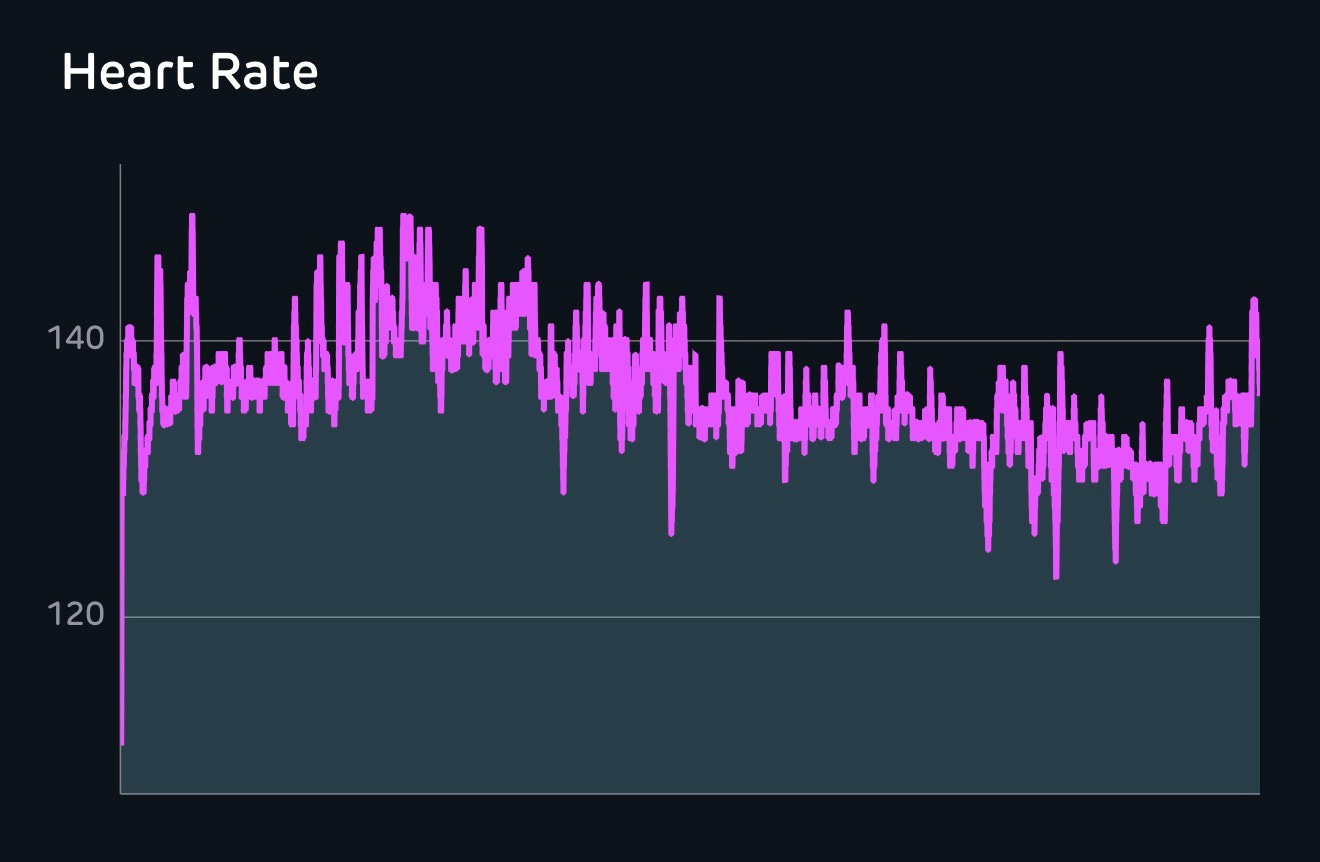
Lesson learned: even when you’re feeling good, keep feeding the machine.
I finished six minutes behind Samir, but approximately eight minutes ahead of Chris, Bryn and Andre.
An Even Better Second Place
As pleased as I was with my own performance, one of the highlights of the entire event for me actually came from someone else.
Long-term Swim Smooth swimmer Hillary Hansen, now 64, was also racing in Skopelos. Some of you might remember Hillary from the story we featured on the blog back in May 2024, Like a Fine Wine, She Just Keeps Getting Better With Age!1
I’ve had the pleasure of coaching Hillary since then, and watching her development has been absolutely fantastic. She has worked incredibly diligently on both her stroke and fitness and has managed to bring her CSS pace all the way down to an impressive 1:26/100m.
But UltraSwim represented an entirely different challenge.
Prior to arriving in Greece, Hillary had never tackled anything beyond 10km. Suddenly she was facing 33.3km spread across four days, dealing not only with the distance but also currents, feeding, recovery and the cumulative fatigue that comes from getting up and doing it all over again the following morning.
She was absolutely brilliant.
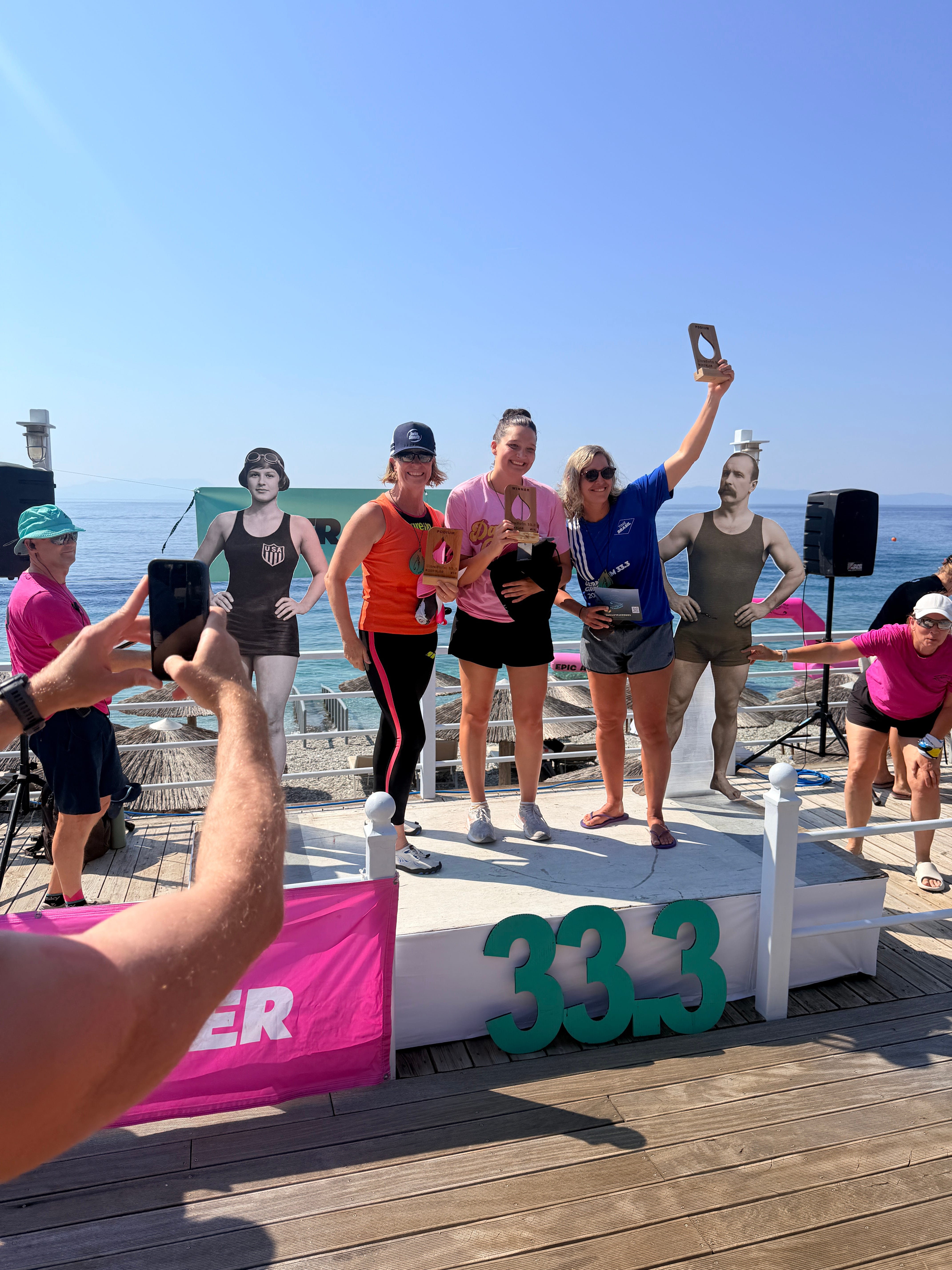
In fact, somewhat wonderfully, we both ended the weekend in exactly the same position: second overall in our respective categories.
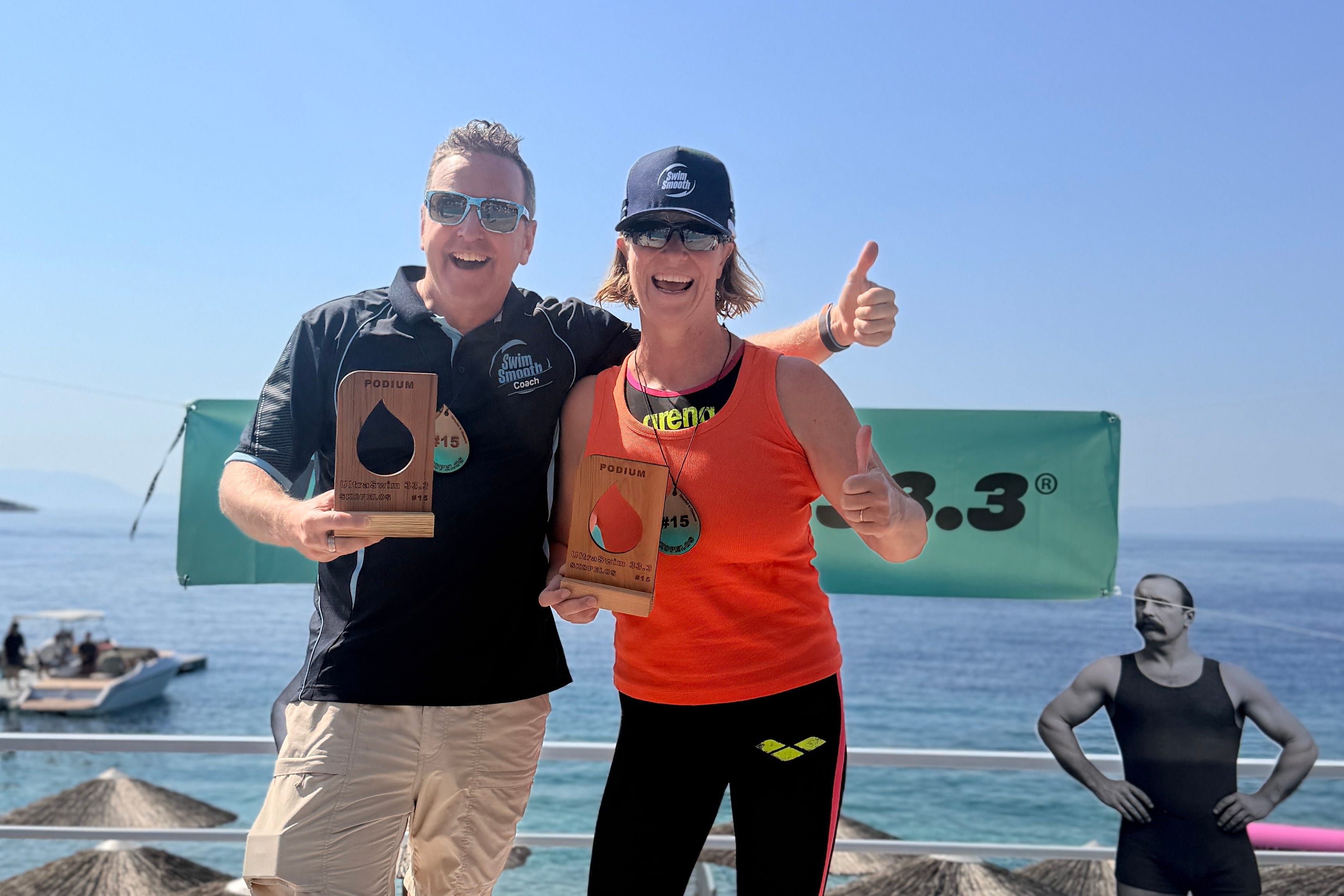
I was thrilled with my own result, but I was probably even more delighted watching Hillary achieve hers. At 64, taking on her first challenge of this magnitude and performing so consistently across four days was a fantastic example of something we believe very strongly at Swim Smooth: you don’t have to stop improving simply because you’re getting older.
With intelligent training, consistency, good technique and a willingness to keep challenging yourself, you might just surprise yourself with what’s still possible.
The Perfect Finish
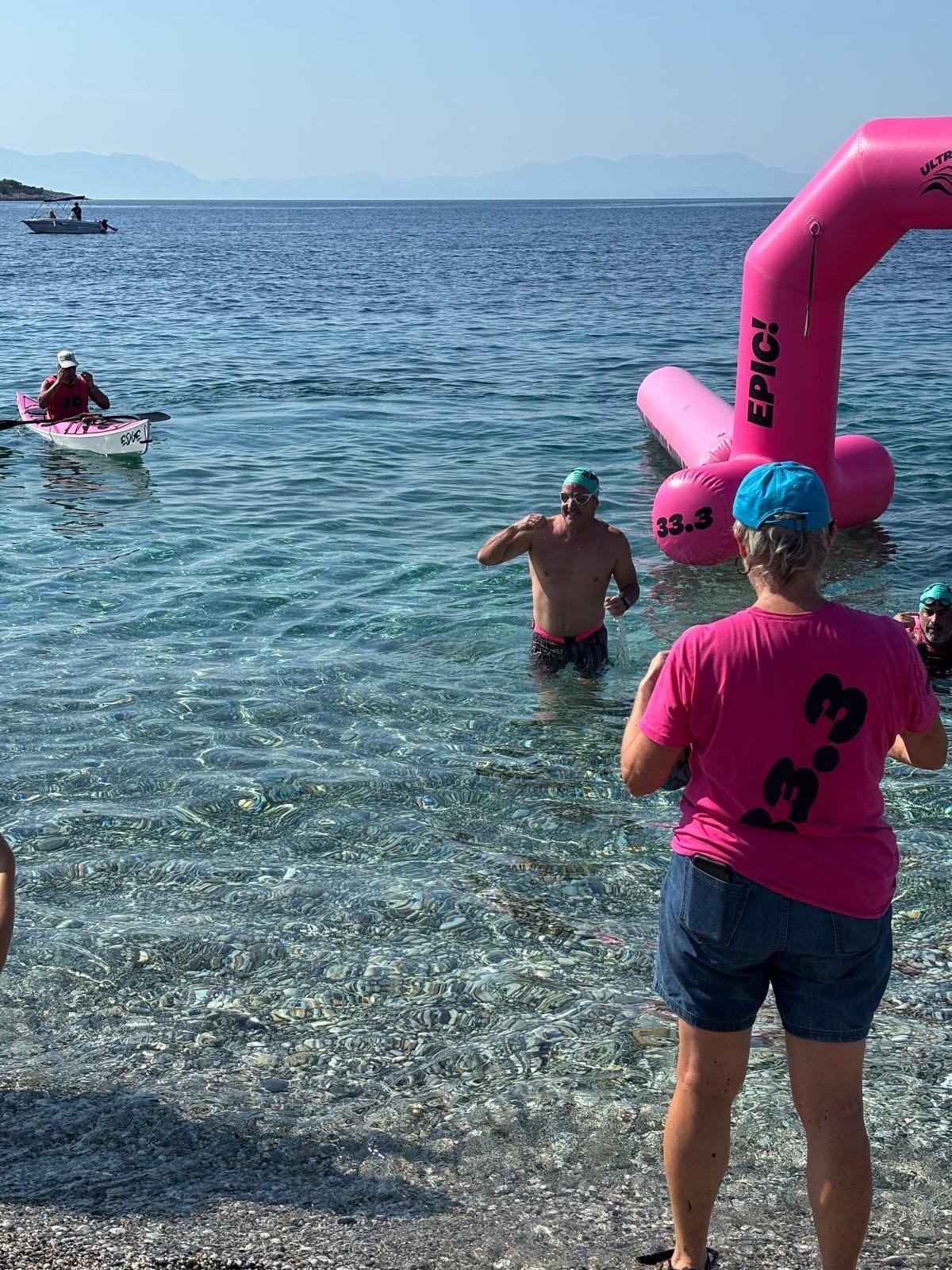
Day 4 might have been my favourite.
We swam around a small offshore island, through a narrow cave tunnel with sea urchins and molluscs clinging to the rocks, around the headland and then made a 700m crossing back towards the mainland.
Chris and I raced hard all the way home, and I managed to find a small surge over the final 500m to finish around ten seconds ahead.
Samir, naturally, was already finished.
But perhaps the best moment came afterwards: the traditional final 1km beach swim, when all 200 competitors start together regardless of speed or finishing position.
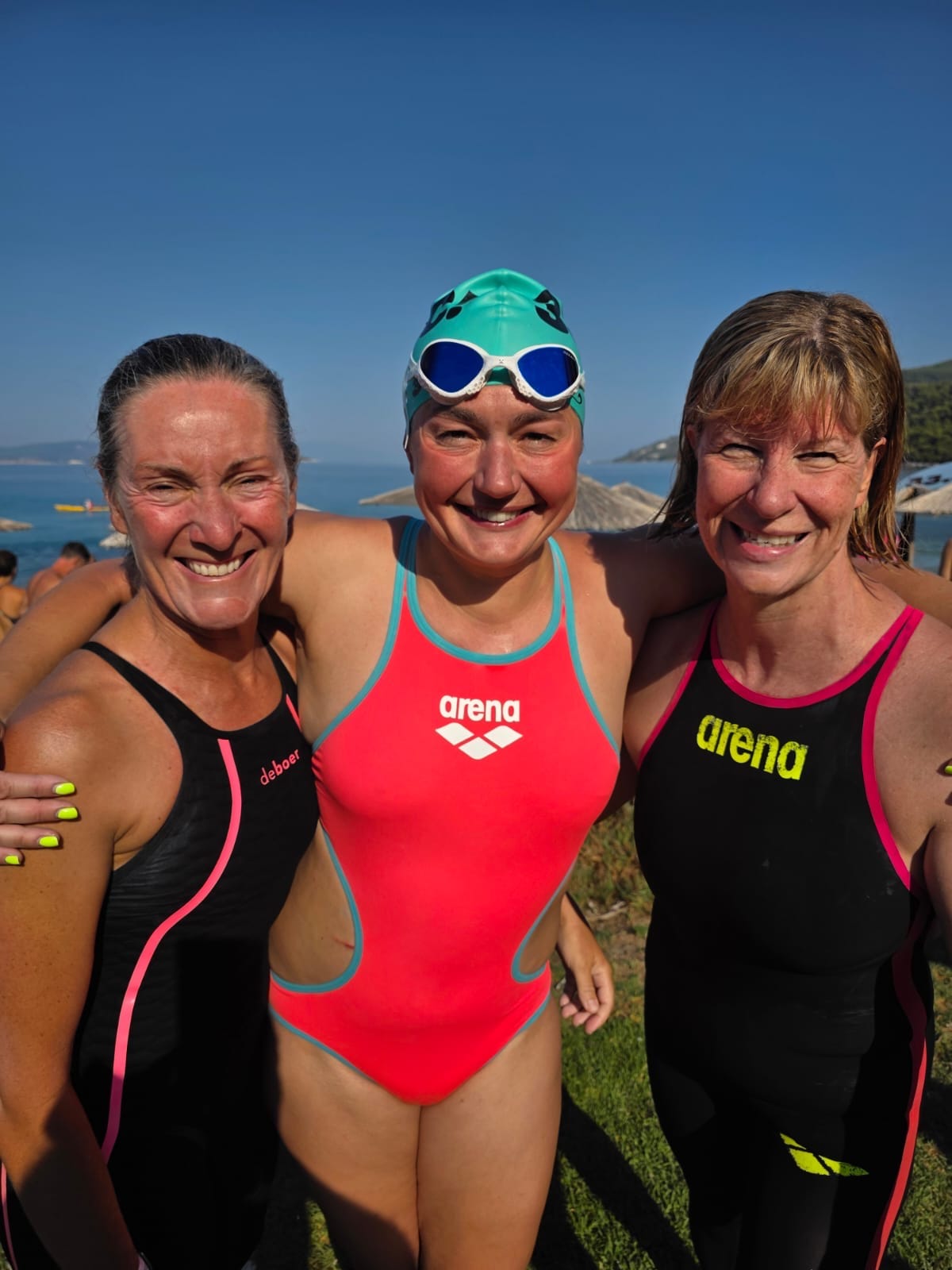
And that perfectly sums up UltraSwim 33.3.
Yes, it’s a race. Yes, we’re competitive. And yes, I thoroughly enjoyed pushing myself over four days.
But UltraSwim does something much bigger.
It takes a distance that many swimmers would never contemplate swimming continuously, breaks it into achievable stages, and surrounds it with spectacular locations, camaraderie, shared meals, new friendships and adventure.
You arrive wondering how you’ll manage 33.3km.
You leave wondering where you’ll swim the next one.
I’ll definitely be back.
Thanks for reading, your coach, Paul.
STORY: Like a Fine Wine, She Just Keeps Getting Better With Age!

This week, we are thrilled to introduce Hillary Hansen, a remarkable 61-year-old swimmer from Montreal, Canada.
